

FHS World 2025: Celebrating 20 years of shaping global hospitality investment
This year marks a milestone for The Bench as it celebrates 20 years in the UAE. Over the past two decades, the Future Hospitality Summit (FHS) has evolved into the region’s most influential hospitality and tourism investment event, serving as a vital platform for leaders, innovators, and investors to connect, collaborate, and shape the industry’s future.
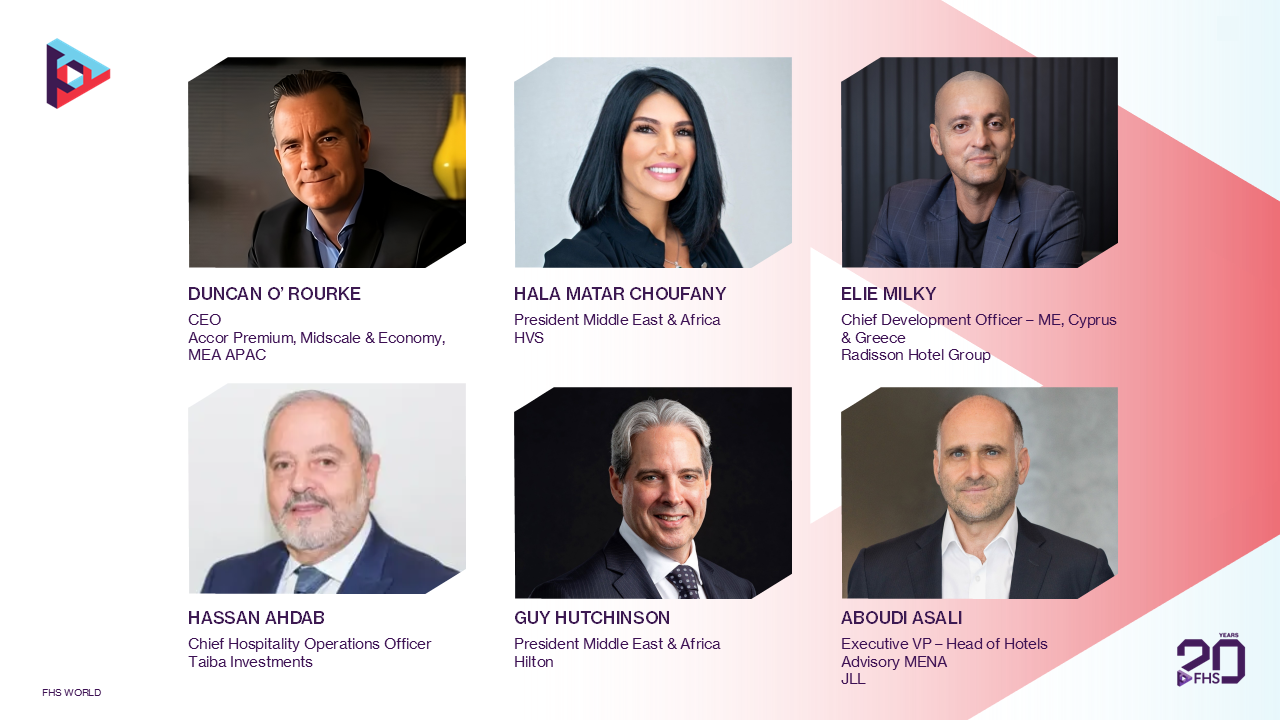
To mark the occasion, Jonathan Worsley, Chairman of The Bench, invited six industry leaders and members of FHS Club—the exclusive community for those shaping hospitality’s future—to share their perspectives on the sector’s past, present, and future. Together, these voices represent decades of experience, diverse insights, and visionary leadership:
• Elie Milky, Chief Development Officer Middle East, Cyprus & Greece, Radisson Hotel Group
• Hala Matar Choufany, President – Middle East and Africa, HVS
• Duncan O’Rourke, CEO of Accor Premium, Midscale & Economy, MEA APAC
• Guy Hutchinson, President Middle East & Africa, Hilton
• Hassan Ahdab, Chief Hospitality Operations Officer, Taiba Investments
• Aboudi Asali, Executive Vice President – Head of Hotels Advisory MENA, JLL
Worsley asked each of them three questions—looking at how hospitality investment has evolved, what has changed most, and what lies ahead.
How Has Hospitality Investment Evolved Over the Past Decade?
The consensus was clear: the industry has shifted from traditional asset-heavy models toward more agile, diversified, and experience-led approaches.
• Elie Milky noted that investment is now more agile, diversified, and data-driven, with investors seeking adaptability, operational efficiency, and sustainability over short-term gains. He highlighted the growth of resorts, serviced apartments, lifestyle hotels, and budget hotels, along with partnerships between soft brands and boutique operators.
• Hala Matar Choufany pointed to a move toward experience-led, lifestyle-driven brands that deliver authenticity, personalisation, and local relevance. She also highlighted flexible ownership models and increased involvement from private equity and institutional capital.
• Duncan O’Rourke emphasised government involvement, particularly in Saudi Arabia and Indonesia, in driving brand-led, experience-focused hospitality growth, with sustainability now essential.
• Guy Hutchinson described a more diversified landscape with strong growth in lifestyle brands, mid-market demand, and mixed-use developments.
• Hassan Ahdab said agility, technology, and sustainability now drive investment, with luxury redefined through boutique hotels and wellness retreats.
• Aboudi Asali noted a shift to diverse assets including serviced apartments, co-living spaces, and experiential venues, with ESG and mixed-use developments increasingly prominent.
The Element That Has Changed the Most
Many agreed that the biggest transformation has been in mindset.
• Milky observed that investors have shifted from chasing luxury trophy assets to building resilient, performance-focused portfolios.
• Choufany said the focus has moved from commoditised room sales to emotionally resonant experiences and diversified revenue streams.
• O’Rourke noted that value is now measured by brand trust, platform strength, and long-term relevance, with branded residences gaining momentum.
• Hutchinson highlighted investment moving beyond traditional destinations into emerging markets such as Saudi Arabia and Africa.
• Ahdab framed it as delivering the “vibe” travellers want, powered by technology and authenticity.
• Asali pointed to a broader investor base, now including property developers, sovereign wealth funds, private equity, institutional investors, and family offices.
Key Trends, Opportunities, and Challenges Beyond 2026
Across the board, leaders expect the industry to become more technology-enabled, experience-led, and sustainability-focused.
• Milky predicted more investment in secondary cities, experience-led travel, and sustainable development, along with opportunities in serviced apartments and clustering strategies.
• Choufany foresaw deeper experiential integration, stronger ESG alignment, and smarter operating models, with AI and data central to guest engagement but warned of talent shortages and rising costs.
• O’Rourke identified mixed-use projects, sustainability, conversions, and lifestyle brands as strategic growth drivers.
• Hutchinson stressed that guest experience will remain paramount, with sustainability, airline network expansion, and technology enhancing service without replacing human touch.
• Ahdab envisioned a tech-driven revolution in operations through AI, IoT, and blockchain, rewarding those who combine innovation with authentic hospitality.
• Asali cited technological integration, sustainability, and adaptive reuse as key trends, while warning of labour shortages and economic uncertainty.
Looking Ahead
The insights of these six leaders reveal an industry transformed—driven by asset-light strategies, new markets, branded residences, experiential travel, and technology integration. As FHS World celebrates its 20th anniversary in October, it remains a crucial meeting point for the ideas, partnerships, and innovations that will define hospitality investment in the years to come.
For more information and registration, visit https://www.futurehospitality.com/world
By Jonathan Worsley, Chairman, The Bench