

Why the Faroe Islands are the place to be this August
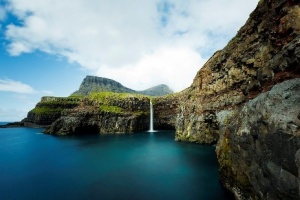
The Faroes – 18 windswept islands in the wild North Atlantic, midway between Iceland and Norway – are ideally placed to offer one of 2026’s most memorable astronomical experiences. On 12 August, a deep partial solar eclipse, with more than 90% of the sun obscured, will be followed just hours later by the peak of the Perseid meteor shower. Under a new moon, up to 100 meteors an hour could be visible in ideal conditions, with no moonlight to wash out fainter shooting stars.
Few places are better suited to viewing this rare, celestial double bill than the remote, otherworldly Faroe Islands. Dramatic sea cliffs, rugged scenery and open coastal landscapes provide unforgettable, atmospheric viewing locations, while a small population, limited development and exceptionally low levels of light pollution offer prime conditions.
New KG hotel is an excellent base
For budding astronomists hoping to make the most of the event, the newly opened KG Hotel in Klaksvík, the Faroe Islands’ second-largest town, offers a comfortable base for exploring the archipelago. Set on the waterfront overlooking a striking harbour, the contemporary hotel pairs understated Nordic interiors with a restaurant showcasing Faroese ingredients and a wellness spa inspired by the surrounding North Atlantic – ideal for unwinding after an evening spent beneath the stars.
Room rates start from DKK 1,990 / approximately £230 per night, including breakfast.
Recommended viewing spots
Susanna Sørensen, Marketing & PR Manager, Visit Faroe Islands, says the key to maximising the viewing experience is to choose accessible locations with minimal artificial light and clear horizons. Some of her scenic recommendations within easy reach of Klaksvik include:
Gjógv – A peaceful village on Eysturoy with very little light pollution and expansive coastal views.
Viðareiði - Is the northernmost village in the Faroe Islands, dramatically nestled on a narrow isthmus between the peaks of Villingadalsfjall and Malinsfjall offers a spectacular backdrop for the eclipse and, later, the Perseids.
Kunoy - Kunoy is a tranquil, whitewashed village on the western shores of the island of the same name, home to one of the Faroe Islands’ only forests (Viðarlundin í Kunoy, planted in 1914) and framed by dramatic mountain scenery overlooking the neighbouring island of Kalsoy. Its isolation means exceptionally little artificial light once night falls.
“However, anywhere in the Faroe Islands away from the larger towns will work – what makes the islands so special for astronomical events like these is that it’s easy to move around and find clearer skies if needed, as you are never far from an isolated, dramatically beautiful spot with little to no light pollution,” adds Sørensen.
ADVERTISEMENT
How to travel to the Faroe Islands
Flights to the Faroe Islands from Edinburgh operate twice a week from mid-April to mid-October and cost from £200 pp return. A Gatwick service to the Faroe Islands runs twice weekly until 31 August. Visit www.atlantic.fo for further information or to book.
Strandfaraskip Landsins Ferries offer crossings between the islands. Prices start from £10 one-way.
Choose where to stay from a wide selection of hotels, guesthouses, and farm stays across the 18 Faroese islands. To learn more, visit Staying in the Faroe Islands.