

Airlines News Page 15

British Airways June Sale launches - with savings on flights and holidays from city breaks to beach
British Airways and British Airways Holidays have launched their annual June sale that will run until 25 June 2026. Get your summer off to a flying start by saving on your next adventure and taking advantage of discounts on flight and holiday packages to a range of destinations.

The Americas’ Aviation World Cup Moment
As football’s governing bodies prepare for the largest FIFA World Cup in history, aviation executives gathering in Rio de Janeiro for the IATA Annual General Meeting find themselves confronting a similar question. The Americas have been handed home advantage. The United States, Mexico and Canada will host a tournament expected to attract millions of international visitors, while airlines across the hemisphere are adding capacity, opening routes and positioning themselves for a decade of growth. Yet as any football supporter knows, hosting the tournament does not guarantee lifting the trophy. Talent matters. Infrastructure matters. Execution matters even more.
IATA AGM 2026: Africa and the Middle East Stand at Aviation’s Most Difficult Frontier
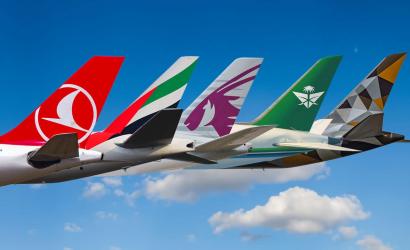
Africa and the Middle East occupy a peculiar place in global aviation. One is home to some of the world’s most powerful connecting hubs, the other remains one of the least connected regions on earth. Yet at this year’s IATA Annual General Meeting in Rio de Janeiro, the two were presented less as separate stories than as adjoining chapters in the same strategic question: where will aviation’s next phase of growth come from, and what will it take to unlock it?

Net Zero at 35,000 Feet: Aviation’s Grand Plan Risks Becoming Trapped in Purgatory
For an industry often accused of moving too slowly on climate change, aviation has spent the better part of a decade doing something remarkable. It has aligned around a single destination. Net zero by 2050 is no longer seriously contested within commercial aviation. Airlines, airports, manufacturers, fuel producers, regulators and governments broadly agree on the objective. The challenge is no longer ambition. The challenge is execution.
IATA AGM 2026: LATAM’s Rise Reflects a Region Coming of Age
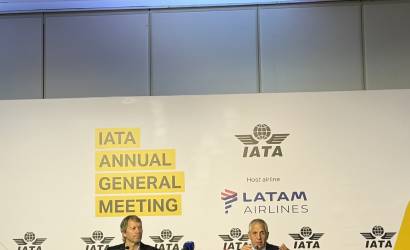
When the airline industry’s leaders last gathered in Rio de Janeiro for an IATA Annual General Meeting in 1999, Latin American aviation occupied a very different place in the global system. At the time, the region accounted for just 4% of global air traffic and carried around 68 million passengers annually. Its airlines were largely domestic champions, operating fragmented networks with limited international reach. LAN and TAM, the two carriers that would eventually merge to create LATAM Airlines Group, operated separately, carrying a combined 12 million passengers with fleets totalling just over 100 aircraft.

IATA Launches Supporting Alliance for CORSIA EEU Supply
The International Air Transport Association (IATA) launched the Supporting Alliance for CORSIA EEU Supply, regrouping stakeholders across the CORSIA ecosystem in efforts to boost the availability of 225-250 million CORSIA Eligible Emissions Units (EEUs) by spring 2027.
SAF Production Volumes Still Disappointing
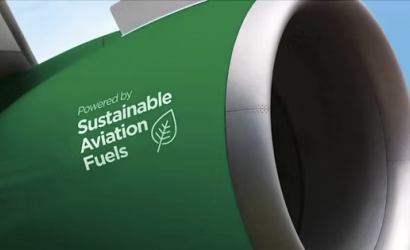
The International Air Transport Association (IATA) released estimates showing that global Sustainable Aviation Fuel (SAF) production is expected to reach around 2.4 million tonnes in 2026, representing just 0.8% of aviation fuel use, at a cost to airlines of $4.3 billion.
IATA AGM 2026: Asia-Pacific’s Aviation Boom Faces a Trillion-Dollar Test
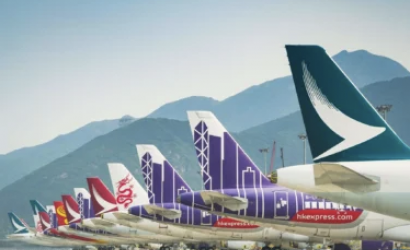
For decades, aviation executives have spoken about the “Asian Century.” At this year’s IATA Annual General Meeting in Rio de Janeiro, the numbers suggest that century has arrived. Over the next two decades, Asia-Pacific is expected to add 2.4 billion passengers, growing from 1.7 billion travellers in 2024 to 4.1 billion by 2044. That represents 41% of all global passenger growth and a compound annual growth rate of 3.8%.
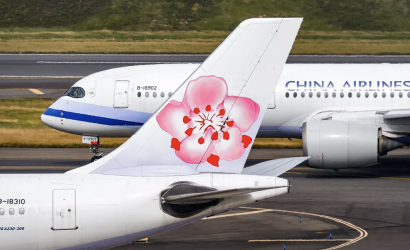
IATA AGM 2026: Why China’s Aviation Story Is Becoming One of the Most Important in the World
For years, the aviation industry’s centre of gravity has been slowly moving east. At this year’s IATA Annual General Meeting in Rio de Janeiro, that shift felt less like a prediction and more like a reality. While much of the discussion around Europe focused on regulation, taxation and competitiveness, the conversation around North Asia centred on growth, digital transformation and the emergence of China as a force that is increasingly shaping the future direction of global aviation. According to IATA’s Regional Vice President for North Asia, Xie Xingquan, the region’s story is no longer simply about recovery. It is about scale, influence and transformation.

IATA AGM 2026: Europe’s Aviation Industry Faces a Summer of Contradictions
The mood around European aviation at the IATA Annual General Meeting in Rio de Janeiro is one of cautious optimism tempered by growing frustration. Airlines are preparing for another busy summer. Passenger demand remains strong. Aircraft are full. Airports are crowded. Yet beneath the surface, many of the industry’s biggest challenges are becoming more acute rather than disappearing. Speaking at the AGM, IATA’s Regional Vice President for Europe, Rafael Schvartzman, painted a picture of an industry squeezed from multiple directions. Geopolitical instability, rising fuel prices, border delays, taxation, sustainability costs and airport charges are all converging at a time when Europe is attempting to maintain its competitiveness in an increasingly connected global marketplace.

IATA Expands Cargo Services in Brazil, Mexico, and Paraguay
The International Air Transport Association (IATA) is expanding the presence of its cargo offerings in Latin America, including the Cargo Accounts Settlement Systems (CASS). Cargo tonne kilometers for carriers based in the region grew an average 3.3% year-on-year in the 10 years to April 2026, resulting in a cumulative growth of 38.8% over the decade. This underpins the following developments:
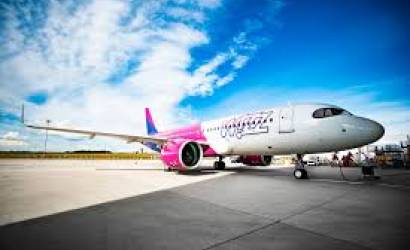
The Origins of the Airline Alliance: How Three Rival Networks Redefined Global Aviation
Most airline passengers interact with an alliance before they realise one exists. The lounge access waiting at the other end of a long-haul flight. The frequent-flyer miles earned on a carrier they have never flown before. The ability to check baggage in London and collect it in Sydney despite travelling on multiple airlines with different owners, different liveries and different national identities. Today these experiences feel routine. In the late 1990s they represented one of the most ambitious experiments the aviation industry had ever attempted.