

Arival 360 Valencia 2026 – Day 2 highlights
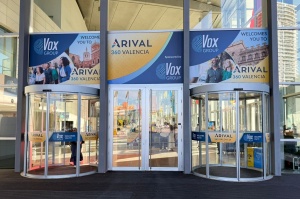
Day 2 of Arival 360 Valencia 2026 delivered a sharp, wide‑ranging look at the forces reshaping the global experiences sector. From the challenges of ticketing and crowd management to the realities of AI‑driven distribution to geopolitical tensions, the day underscored a sector adapting with agility, creativity and data‑driven discipline.
Across keynotes, debates and town‑hall discussions, speakers highlighted the need for smarter marketing, clearer product definitions, stronger collaboration and technology‑enabled resilience as traveller expectations continue to evolve.
Europe’s cultural attractions face mounting pressure as ticket access, governance and crowding collide
Speakers: Valentina Gallazzi (Duomo Milano), Tom Jenkins (ETOA), Chelsey Smith (ExperienceFirst), Peter Muttitt (PM Consulting), Claudio Bellinzona (Vox Group)
This deep‑dive session examined the growing tension between visitor demand, cultural preservation and the operational realities of ticketing at Europe’s most iconic attractions. Panellists highlighted the persistent challenges operators face in securing ticket inventory – from limited availability and inconsistent rules to opaque governance structures and fragmented communication channels.
Speakers stressed that many cultural institutions still lack the technology, coordination and standardised processes needed to manage high visitor volumes effectively. Governance frameworks, often shaped by preservation priorities, can restrict flexibility and complicate access for both operators and travellers.
ADVERTISEMENT
Yet successful models are emerging. Duomo Milano’s innovative approach to flow management, diversified access options and proactive collaboration with operators was cited as a leading example of how attractions can balance conservation with commercial needs. The panel called for stronger alliances between operators, attractions and policymakers to develop shared standards, improve transparency and combat unauthorised ticketing.
With demand continuing to rise, the session underscored that sustainable growth will depend on unified practices, better technology adoption and a renewed commitment to visitor experience and heritage protection.
Geopolitics reshapes global demand as travellers shift away from perceived risk [correction for media: this session took place on day 1]
Speaker: Brennen Bliss (CEO, Propellic)
Bliss gave a data‑driven examination of how the Middle East conflict is influencing global travel behaviour. While declines in travel intent across the UAE, Qatar, Jordan and Saudi Arabia were expected, the conflict’s impact is extending into non‑conflict destinations such as Greece and Spain, where increased traffic is not converting into bookings.
Southeast Asia continues to grow, with Thailand and Vietnam benefiting from travellers seeking perceived safety and stability. Drawing on Propellic’s extensive advertising spend database, Bliss urged operators to maintain marketing activity during downturns to benefit from lower costs and preserve visibility. Flexible cancellation policies and confidence‑building messaging were highlighted as essential tools for navigating volatile demand.
Privacy shifts and broken attribution force a rethink of travel marketing fundamentals
Speaker: Brennen Bliss (CEO, Propellic)
In a second session, Bliss unpacked insights from $250 million in travel advertising spend, outlining five pillars that underpin effective performance marketing in a privacy‑constrained world: establishing truth, finding leverage, building growth plans, activating audiences and scaling elegantly.
With traditional tracking eroded by privacy regulations, Bliss emphasised the need for robust attribution frameworks and accurate data infrastructure. He highlighted stark differences in booking behaviour across source markets – from last‑minute UK bookers to long‑lead US planners – and stressed the importance of tailoring campaigns accordingly. Multi‑day tours, with their long booking cycles, require more sophisticated attribution models to avoid misleading signals. AI’s growing role in audience targeting was acknowledged, but Bliss warned that its effectiveness depends entirely on clean, accurate sales data.
AI accelerates a new distribution power struggle between OTAs and operators
Andrew Lawrence (Vox Group), Dan Flores (Satisfi Labs), Christian Watts (Magpie), Roisin O’Sullivan (Walks/Devour), Lynette McLennan (VisitScotland), Arturo Moreno (Civitatis), Michalis Sflomos (Booking.com)
A debate explored how AI is reshaping the balance of power between OTAs and direct operators. Panellists agreed that OTAs currently hold a structural advantage: vast datasets, strong brand trust and highly structured content that AI systems can easily interpret.
However, operators argued that AI also opens the door to reclaiming customer relationships through personalisation, niche positioning and differentiated storytelling. The discussion underscored the growing importance of trust, operational excellence and data quality as AI agents increasingly mediate discovery and booking. The consensus: the future will be a hybrid ecosystem where both OTAs and operators must innovate to stay relevant.
Culinary tourism evolves as travellers demand inclusivity, authenticity and sustainability
Speakers: Matthieu Floret (Food Lover Tour), David Mora (Basque Culinary Center), Laura Sileo (Pernod Ricard), Cyra Alcock (Walks/Devour)
Culinary tourism leaders explored the sector’s rapid evolution, driven by shifting consumer values around health, inclusivity and authenticity. The rise of sober travel is prompting operators to develop premium non‑alcoholic pairings and experiences, while demand for plant‑based options continues to grow – even in regions where traditional cuisine poses challenges.
Speakers emphasised the need to balance cultural integrity with inclusivity, ensuring all guests feel equally engaged regardless of dietary preferences. The panel also called for a shared code of ethics to guide sustainable sourcing, group sizes, environmental impact and community engagement. With travellers increasingly seeking meaningful, culturally rooted food experiences, operators were encouraged to innovate while preserving local heritage.
Women‑centred travel moves from niche to mainstream as operators redesign for safety and connection
Speakers: Alessandra LoTufo Alonso (Women in Travel CIC), Natasha Lawrence (The Travel Corporation), Kimberly Stirdivant‑Wasson (Tourism Australia), Florencia Allo Moreno (Intrepid Travel)
Women‑focused travel is emerging as a major growth model as operators design products that prioritise safety, comfort, connection and empowerment. Speakers highlighted the importance of embedding women’s needs into product design rather than treating them as an add‑on, with storytelling and local female entrepreneurship playing central roles.
From younger women seeking inclusive, social experiences to older travellers prioritising authenticity and cultural depth, the panel stressed the need for segmentation and nuance. Women‑led local experiences were showcased as powerful drivers of community impact, economic inclusion and deeper cultural engagement.
Airbnb sharpens its experiences strategy with quality, relevance and landmark supply
Speakers: Doug Weiss (Airbnb), Janelle Visser (Arival)
Nearly a year after its relaunch, Airbnb Experiences has undergone a strategic reset focused on quality, relevance and operational clarity. Weiss outlined how the platform has shifted from broad global rollout to targeted city‑level optimisation, improving host onboarding, refining supply and leveraging Airbnb’s extensive guest data to personalise discovery.
A major focus has been filling gaps in iconic landmark experiences to better serve first‑time visitors, while maintaining the platform’s hallmark of unique, locally led activities. New features such as multi‑tagging, private tour facilitation and integrated ticketing aim to improve visibility and conversion. Despite onboarding and pricing challenges, Airbnb signalled strong momentum and a renewed commitment to operator collaboration.
New research reveals a fragmented but fast‑evolving multi‑day sector
Speaker: Bruce Rosard (Co‑founder & CCO, Arival)
Arival’s latest research revealed a multi‑day sector defined by complexity, fragmentation and significant opportunity. Rosard outlined the diverse ecosystem of inbound and outbound operators, DMCs and distribution partners, each with distinct roles and challenges. Product types span escorted tours, FIT itineraries, packages and self‑guided trips, each with unique operational demands.
Despite connectivity gaps and inconsistent terminology, momentum is building around standardisation, digital marketing and AI‑enabled distribution. Boomers continue to drive demand for cultural, extended itineraries, while Gen Z and Millennials prioritise adventure, sustainability and culinary experiences. Small group sizes and personalised itineraries are emerging as key growth drivers, supported by improved technology and clearer product definitions.
Sports tourism surges as fans travel further, stay longer and spend more
Speakers: Peter Muttitt (PM Consulting), Matt Jones (Klook), Christian Vicente Bermingham (Travel Connection Spain), Tom Cassidy (Liverpool FC)
Sports and events tourism is becoming one of the industry’s most powerful growth engines, with the global market projected to approach $2 trillion. Travellers increasingly plan trips around major sporting and music events, resulting in longer stays and higher spend.
Speakers highlighted the shift from informal ticketing to official partnerships that ensure safe, authentic access. Football remains a dominant driver, with women’s football and emerging sports gaining traction. International players are reshaping visitor demographics, drawing fans from their home countries and boosting local tourism. Operators were encouraged to leverage official suppliers, integrate technology and collaborate with DMOs to maximise engagement and revenue.
Operators call for clearer standards and stronger collaboration amid market uncertainty
Speakers: Siobhan Pigot (Memories France), Luca Perfetto (Towns of Italy), David Vendrell (In Out Barcelona Tours), Jean‑Marc Champrobert (Magnificat), Bruce Rosard (Arival)
The day closed with a candid operator town hall exploring the realities facing European and US operators. Despite geopolitical uncertainty, demand remains steady, though luxury travellers are booking closer to departure and OTAs are compensating for softer group tour volumes.
A major concern is the rise of unregulated operators, which undercut pricing and strain relationships with attractions. Panellists called for stronger collaboration across the ecosystem to protect standards and improve customer clarity, particularly around ambiguous terms such as “small group tours”.
AI was highlighted as a transformative tool for analysing customer feedback, forecasting demand and automating operations. While challenges persist, operators expressed cautious optimism, emphasising innovation, dialogue and value‑driven experiences as the path to resilience.