

5 Best UK Trails for Walking Holidays and Itineraries

The UK’s long-distance paths are a walker’s dream: from rugged mountains and moors to windswept coasts and gentle hills. Each trail feels like a journey through a different storybook landscape, and planning a walking holiday in the UK is part adventure, part personal discovery. As a well-travelled guide, I know how rewarding it can be to step out of daily life and immerse oneself in these varied scenes – whether for an afternoon or a couple of weeks. Along the way you’ll meet charming villages, historical landmarks, and fellow walkers swapping tales over a pint. (And if you ever need local insight while planning walking holidays in the UK, a friendly expert like Walk With Williams can add that personal touch.)
Below are five classic UK trails – a curated collection of the best UK trails – each with its own character. We’ll cover highlights, recommended duration and difficulty, special seasonal or logistical tips, and where to find guided options. Let’s lace up our boots and hit the trail!
Coast to Coast Path (St. Bees to Robin Hood’s Bay)
Often called Wainwright’s Coast to Coast, this legendary route was first mapped by Alfred Wainwright. It crosses three National Parks – the Lake District, Yorkshire Dales, and North York Moors – showcasing “the best of three of the UK’s most scenic and visually stunning” landscapes. You begin with a dip in the Irish Sea at St Bees and end with another in the North Sea at Robin Hood’s Bay – a true coast-to-coast rite of passage.
Trail highlights: Alpine Lakeland valleys around Keswick; the calms of Thirlmere and Grasmere; rolling farmlands and bonny villages in the Yorkshire Dales; the wild heather moors of the North York Moors. Quaint market towns like Grasmere (Wordsworth’s home) and Grassington offer culture and pubs each night. The ending cliff-top views into Robin Hood’s Bay are especially rewarding.
Distance, duration, difficulty: About 192 miles (309 km) in total. Most walkers split it over 12–16 days, with daily stages often 10–15 miles. It’s considered challenging, not only for length but for some steep ascents (e.g. Helvellyn’s ridges or the Yorkshire moors). If fitness is a concern, allow extra days.
Seasonal/logistical tips: Summer (May–September) is the most popular time: warmer weather and longer daylight. Late spring or early autumn can be quieter but watch for rain and mud in the moorlands. Book B&Bs or inns in advance during summer. Note there’s no official way to hike “all at once” – the route is composed of existing paths and country roads (no single authority). Take note of park buses or taxis for tricky sections.
Recommended operators: Several companies offer luggage-transfer self-guided options. For example, Walk the Trail has coach-and-walk packages that include maps and B&Bs. BritishWalkingHolidays and some B&B cooperatives also do guided or self-guided tours along the Coast to Coast.
West Highland Way (Milngavie to Fort William)
Stretching 96 miles (154 km) north from Milngavie (near Glasgow) to Fort William, this was Scotland’s first National Trail. It’s a varied Highland landscape: loch shores, wild moors, and crags. You’ll pass Loch Lomond (Britain’s largest lake by surface), cross the endless bogs of Rannoch Moor, and then reach the towering peaks of Glencoe and Ben Nevis. The official site notes it “takes in a huge variety of scenery… from countryside parks to loch-shores and open moorlands to steep mountains”.
Trail highlights: Scenic highlights include the bonnie banks of Loch Lomond, the vast expanse of Rannoch Moor, spectacular views in Glencoe (think dramatic mountains and waterfalls), and the Nevis Range as you approach Fort William. The route’s mix of gentle forest trails and wild open spaces keeps the scenery fresh.
Duration, difficulty: Typical itineraries span 6–10 days, averaging 10–15 miles per day. The terrain is well-marked (it’s very popular), but the North section is quite rugged and can be strenuous. Total elevation gain is moderate (aside from a few peaks like Conic Hill) – however, fickle mountain weather can add challenge. Overall, rated moderate-to-hard.
Seasonal/logistical tips: Summer offers long evenings and mild weather – but also midges near the lochs! Late spring (June) and early autumn (Sept) can be ideal. Winter should be avoided except for expert snow-trekkers (mountains get snow and ice). Allow for rain and wind any time of year. Accommodation in Highland villages is limited – book well ahead, or consider self-catering or camping. Public transport links (trains and buses) from Milngavie and to/from Fort William are good.
Recommended operators: The West Highland Way is well-served by specialist outfits. For guided or self-guided tours with luggage transfers, look at companies like HF Holidays or Highland Explorer (for Highland packages). Local B&B and lodge networks often package stays. Even if self-planning, the West Highland Way Trust provides great maps and tips.
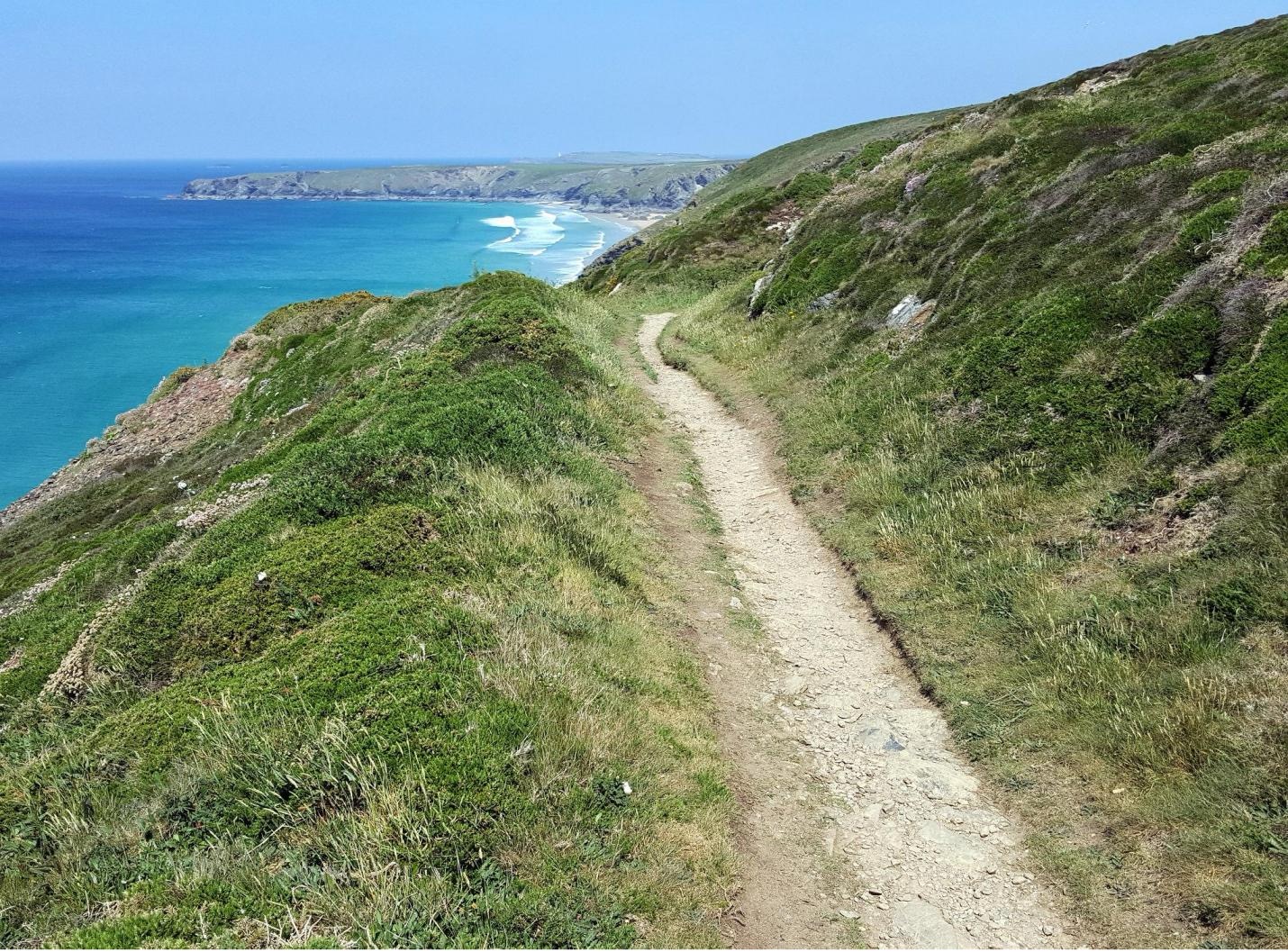
St Cuthbert’s Way (Melrose to Lindisfarne)
This lesser-known route links the Scottish Borders (Melrose Abbey) with the Holy Island of Lindisfarne, England. It’s about 62 miles (100 km) through rolling hills, pastoral valleys, and final coastal marshes. It traces part of the medieval pilgrimage of St Cuthbert, so there’s a spiritual vibe. Highlights include Melrose Abbey ruins, the Cheviot Hills, and the tidal causeway to Lindisfarne Castle.
Trail highlights: Historic Melrose Abbey and Dryburgh Abbey; sweeping views of Kielder Forest; the hillfort at Yeavering Bell; the quiet wetlands and beaches of Holy Island. Wildlife is abundant (red squirrels, birds on the estuary). The final approach over Lindisfarne Causeway (only crossable at low tide) is dramatic – plan it carefully!
Duration, difficulty: Typically walked in 4–6 days (10–15 miles a day). The overall difficulty is moderate: some ups in the Cheviots (900m summit), but a lot of lower farmland and coastal path in Northumberland. It’s not as tough as mountain trails, but you do need to be comfortable with back-to-back walking days.
Seasonal/logistical tips: Best in late spring or summer for wildflowers and mild weather. In winter, Lindisfarne floods its causeway each tide, so high-tide ferries only – not for novices. Always check the tidal timetable for Holy Island (approximately a 3-hour safe crossing window twice a day). Lindisfarne has very limited accommodation and is extremely popular in summer; book ahead if you want to stay overnight.
Recommended operators: There are guided and self-guided options. For example, KF Cycling & Walking or small-scale UK outfitter BritishWalkingHolidays can arrange B&B-based tours (with luggage transfers). The local Borders tourist board also lists B&Bs and hostels along the way. Ramblers’ branches occasionally run group walks on sections.
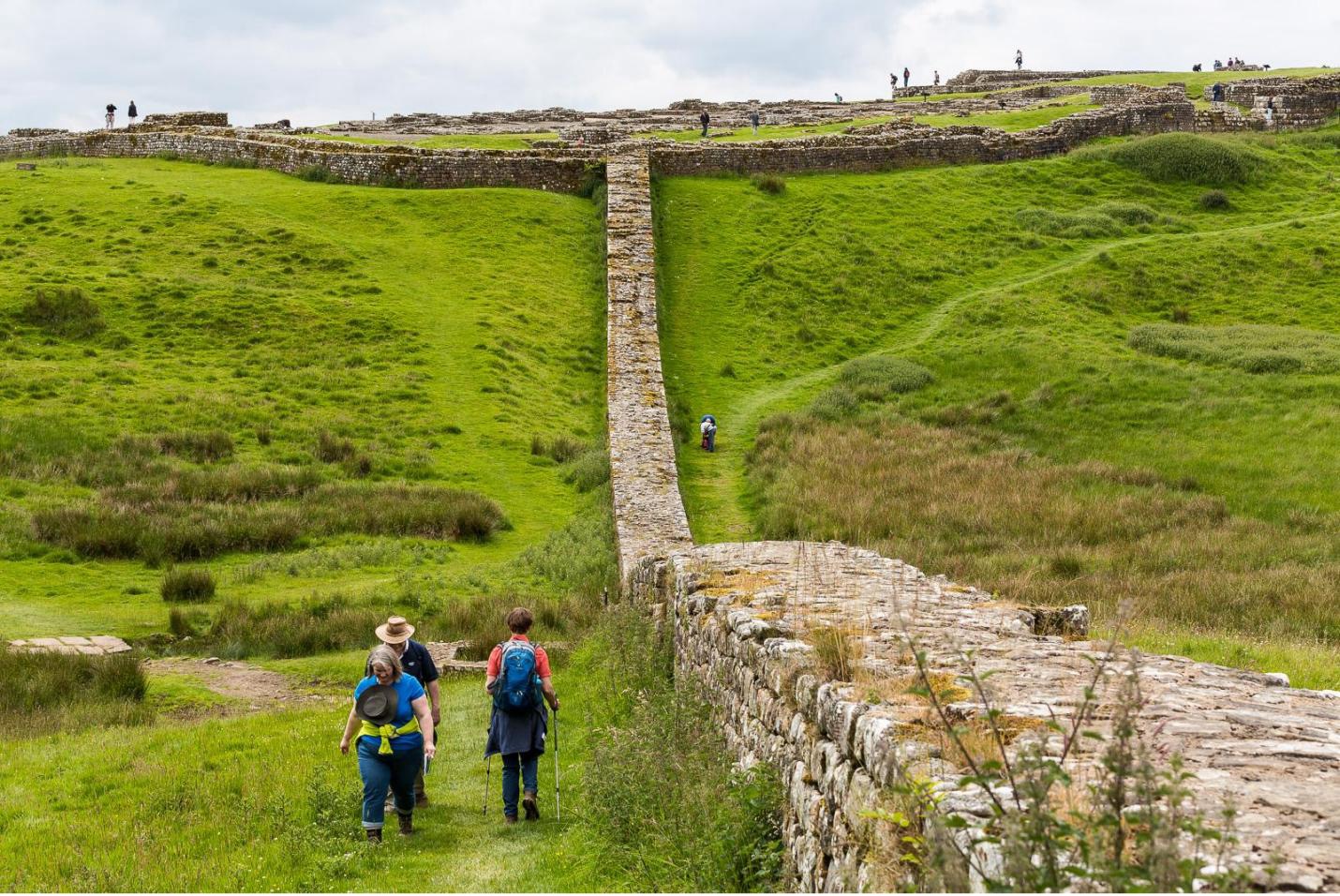
Hadrian’s Wall Path (Newcastle to Bowness-on-Solway)
Following the Roman frontier from the east coast to the west, Hadrian’s Wall Path is a UNESCO World Heritage route stretching 84 miles (135 km). It generally runs from Wallsend (Newcastle area) to Bowness-on-Solway, tracing the remains of the Wall built in AD 122. Along the way you pass Roman forts (like Housesteads and Birdoswald) and open Northumbrian countryside.
Trail highlights: Roman sites galore – fortlets, milecastles, and a grand visitors’ center at Housesteads. Wide horizons of Northumberland (especially between Drumburgh and Walwick). The eastern section has farmland and the Cheviot backdrop; the western moors are more remote. The path is linear but (thanks to trains) it’s easy to break it into eastern/western halves.
Duration, difficulty: Walkers usually budget 5–8 days (15–20 km per day). The route’s graded moderate – quite level overall, though there are a few hills (great views at Steel Rigg, for example). The main challenge is distance and exposure: some stretches can be windy or muddy. The wall itself often forms a low embankment you walk on or alongside.
Seasonal/logistical tips: High summer is popular (fields of rapeseed bloom yellow), but spring and autumn can be equally lovely (and quieter). Winter may see snow on the moor, and large parts are exposed. Much of the path is close to roads or villages, so supplies are rarely far. There are good train links at Carlisle (west end) and Northern trains as far as Walltown, Greenhead, and Hexham for access.
Recommended operators: Various UK hiking tour operators cover Hadrian’s Wall Path. Ramblers Heritage Walks or HF Holidays sometimes have guided groups. If self-guiding, consider a detailed guidebook (English Heritage publishes one) and use the National Trail’s map. Many walkers just do it independently, staying in nearby pubs/inns each night.
Cotswold Way (Chipping Campden to Bath)
For a change of pace, the Cotswold Way is gentle rolling countryside rather than wild moors. This 102-mile (164 km) path from the honey-stone village of Chipping Campden to historic Bath undulates through the Cotswold Hills (designated AONB). Expect green fields, beech woods, and the occasional limestone escarpment. It feels quintessentially English: farmhouses, quaint villages (Bibury, Broadway), and abbeys (Hailes, Tewkesbury) along the route.
Trail highlights: Panoramic views from Coombe Hill or the Cleeve Hill ridge; the atmospheric Sudeley Castle gardens; the unique hill-top spoked village of Birdlip; and the ancient Bath Abbey at the terminus. In spring the bluebell woods are spectacular, and in summer the fields are lush.
Duration, difficulty: Most itineraries are 7–10 days (10–15 miles per day). It’s rated easy-to-moderate: the ascent is never extreme (highest point around 300m), but the ups-and-downs are steady. Well-maintained paths and frequent pubs make it very walker-friendly.
Seasonal/logistical tips: The Cotswolds can be muddy after rain; walking boots are recommended anytime. Summer brings many day visitors (especially around Bath), so spring or autumn might feel quieter. For light: the trail links into Bath, where accommodation choices are plentiful but need booking (it’s a UNESCO city). Trains service Broadway, Cheltenham, Cirencester, and Bath, so planning segments by public transport is easy.
Recommended operators: Because it’s popular, many companies offer Cotswold Way trips (self-guided with bags moved each day). BritishWalkingHolidays and Alpine Travel UK are examples. Even hire a Rover ticket and do it yourself – the way is straightforward with plenty of signposting.