

BTN Interviews: Priya Paul on Reinventing Indian Hospitality, THE Park Hotels and Ran Baas Patiala
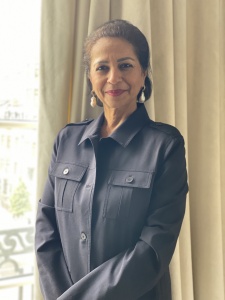 Priya Paul, Chairperson, Apeejay Surrendra Park Hotels
 In this exclusive interview with Breaking Travel News, Priya Paul, Chairperson of Apeejay Surrendra Park Hotels, discusses her role in reshaping Indian hospitality through design, culture, creativity and contemporary luxury.
Paul reflects on the evolution of THE Park Hotels from traditional city hotels into vibrant social destinations known for art, nightlife, food, fashion and local cultural engagement. She also discusses the opening of Ran Baas Patiala, a restored palace hotel that celebrates Punjab’s royal heritage while offering a modern interpretation of luxury.
The conversation also explores the group’s expansion plans, including new projects in Mumbai and Kerala, its growth target of 85 hotels by FY2030, the impact of the company’s 2024 IPO, and its sustainability roadmap towards carbon-neutral operations by 2032.
The interview offers insight into Paul’s vision for Indian hospitality, her Padma Shri honour, women in leadership, and the future of Indian design-led luxury.
BTN: You stepped into leadership very young and went on to reshape one of India’s most recognisable hotel groups. When did you realise you wanted to do things differently?
Priya Paul: I started working very young, at 22. At the time, I did not know I would spend so many years in hospitality. My family’s interests were very varied, and my father felt hospitality would be a good training ground for me.
When I entered the business, I looked at it with fresh eyes. I did not come from a traditional hospitality background, which allowed me to take risks and think differently.
I have always been interested in art, design, music, food, fashion and culture, and I wanted to bring those interests into hotels. In the early 1990s, very few hotels in India were speaking that language. Today, many brands describe themselves as boutique, design-led or lifestyle hotels, but we were exploring those ideas in 1992, 1993 and 1994.
At that point, we had hotels in Kolkata, Visakhapatnam and Delhi, and we were already looking at how to reinvent and redesign them. I took that idea much further.
BTN: What did you feel was missing from Indian hotels at the time?
Priya Paul: Hotels in the 1980s and 1990s were often very formal. Many of the top hotels had brass, marble and conventional luxury finishes, but there was little that felt exciting or expressive.
After the economic liberalisation of the country in 1991, a new generation of Indians had money and wanted places to go out, socialise and spend time. In most cities, the options were either formal clubs or traditional luxury hotels. There was very little that felt relaxed, modern and fun.
That is what I wanted to build: spaces I would want to spend time in myself. We engaged with local communities and made our hotels in Kolkata, Delhi and Visakhapatnam hubs of nightlife, culture, food, music and entertainment.
BTN: The Park Hotels have always had a distinct energy - design, art, nightlife, food and culture. Was your ambition to create hotels, or social and cultural destinations?
Priya Paul: That is what made the hotels different. Budgets were tight, there was very little advertising and no social media, so we had to create moments people would talk about.
We hosted art shows, fashion shows, cultural events, talks, comedy and theatre. Some of the first fashion shows by many of India’s top designers happened at our hotels in Kolkata and Delhi. We were and are very connected to the creative community.
That is how the hotels became known as buzzy, happening places where people wanted to spend time, not just places to sleep. We carried that energy into other cities, including Bengaluru, Chennai and Goa.
BTN: In such a competitive market, how do you define the distinctive niche of The Park Hotels?
Priya Paul: We live our brand values very consistently. We focus on differentiation, creativity and making our spaces enjoyable places to spend time.
Wherever we go, we look at how we can engage with local communities through food, nightlife, culture and design. Our hotels are in city centres, and they have always had a strong social aspect. People come because they want energy, not formality.
Our people are also one of our greatest strengths. I often say creativity is in our DNA. Our teams are encouraged to create events, innovate and deliver service in their own way.
The company started in 1967, so we have been around for almost six decades, and over that time we have built a loyal customer base.
BTN: How do you build loyalty around a brand that is individual and unconventional?
Priya Paul: For us, loyalty is not just about rooms. It is about the whole brand experience: the events, restaurants, nightlife, design and the feeling of being part of something.
We have customers for life. Some people met in our bars or clubs and later got married in our banquet halls. That journey matters.
We are not simply saying, “Come and sleep.” We are saying, “Come and experience something.” Whether someone is local or visiting from another city, there are many reasons to engage with us. Our loyalty programme now has more than 250,000 members, and it continues to grow.
BTN: How do you define luxury today?
Priya Paul: I do not think there is one definition of luxury anymore. Every brand and every segment has its own interpretation.
Luxury can mean a very hands-off experience or being in nature, or it can mean being closely looked after with everything taken care of. For us, it means contemporary Indian luxury: five-star service and facilities, but delivered in a way that feels engaging, unstuffy and relevant.
I like to describe it as the attentiveness of white-glove service, without the white gloves.
BTN: You seem to approach hotels almost like portraits of cities. What do you look for when entering a new destination?
Priya Paul: Every hotel needs its own identity. That begins with research, and for me, that means active research. I visit, read, talk to people, meet people from the destination and understand its history and culture.
When planning a hotel, I may visit the destination many times and stay in different hotels, because every hotel gives you a different view of a city. Then we look at how our brand can be expressed through that place - through food, wellness, business facilities, design, art and the wider guest experience.
I am not a designer, but I know what the brief should be. A lot depends on choosing the right collaborators to interpret that brief.
BTN: Ran Baas in Patiala is not just a hotel; it is the revival of a historic palace. What was the emotional moment when you realised this building could live again?
Priya Paul: We bid for it and won the bid from the Government of Punjab during Covid. Even though I am Punjabi, I had never been to Patiala and did not know the palace well.
It felt like a homecoming, but the enormity of the project only really hit me when I first visited. I remember thinking, “This is a very big job.”
The more I researched it, the more I understood how important the fort complex and palace are to Punjab, to Patiala’s royal history and to the state. I feel that responsibility very deeply.
Since opening, the response from the Government, the Chief Minister, the diaspora and Punjabis across India has been phenomenal.
BTN: Punjab has such a powerful cultural identity. What did you most want international guests to feel at Ran Baas?
Priya Paul: I felt the joy of Punjab needed to be celebrated in Punjab. Many people visit for gurdwaras, family or friends, but not necessarily for tourism. Ran Baas is a way of showcasing everything that is vibrant, generous and culturally important about Punjabi culture.
We used embroidery, artwork, photography, paintings and craft, and wherever possible worked with Punjabi talent - from the uniforms to the graphic design and conservation architecture. The idea was to bring people with a deep connection to the place into the project and help revive that spirit.
BTN: Ran Baas has been described around the idea of “palace life, modern living.” What does that mean in practice?
Priya Paul: From the beginning, I was clear that I did not want to recreate each room exactly as it may have been.
There were very few archival photographs, so we did not have enough evidence to restore every room in a literal way. That gave us the liberty to reinterpret.
If you were a Maharaja, you would choose the best products available to you - chandeliers, tiles, marble, furniture - from different places. So I asked: what would a modern-day Maharaja do?
The result is a combination of old and new. You are very much in a palace, surrounded by arches, windows, scale and history, but the experience is contemporary in terms of comfort, fittings, showers, baths, mattresses and design. Because we represent contemporary India, the hotel also had to feel contemporary and luxurious.
BTN: Are luxury travellers becoming more curious and adventurous?
Priya Paul: Absolutely. Within India and internationally, people are looking beyond the obvious destinations.
Ran Baas is exciting because it is a real palace hotel in a destination many people know of, but may not have truly experienced. Patiala is a perfect two- or three-day destination. It has palaces, royal gardens, shopping, an important gurdwara, the Kali Temple and a strong cultural identity.
The hotel itself is also a place to relax. The spa is set in the old royal kitchens, which gives it a very unique atmosphere.
BTN: You are expanding into places such as Kerala and Mumbai. How are those projects developing?
Priya Paul: One of our next major openings is The Park in Mumbai. We already have a hotel in Navi Mumbai, close to the new airport, and this is a property we acquired last year. It will open in the middle of next year, with around 90 rooms, and will be an exciting edition to Mumbai.
In Kerala, we have added three properties to The Park Collection, including a very special property that is part of Relais & Chateaux, as well as smaller properties on Vembanad Lake.
BTN: What is your long-term vision for The Park Hotels?
Priya Paul: We currently have 42 hotel properties across 32 cities, with 2,677 keys across The Park, The Park Collection, Zone by The Park and other brands.
By FY2030, we expect to have 85 hotels with 6,635 keys. We are growing through our own projects in cities including Kolkata, Visakhapatnam, Navi Mumbai, Pune, Jaipur and Juhu, Mumbai, and also through our asset-light Zone by The Park model.
Zone by The Park continues to grow in destinations including Mashobra, Dharamshala, Manali, Ayodhya, Ujjain and Mathura.
We also have Flurys, our 100-year-old confectionery brand from Kolkata, which now has 110 outlets and is an important part of our growth story.
BTN: The IPO in 2024 marked a major new chapter. How do you balance growth and investor expectations with creativity?
Priya Paul: Investors are interested in us because of our creativity and differentiated products. That is the reason our brand stands apart.
We had private equity in the company from 2007, so good governance has been embedded for a long time. The IPO has strengthened our balance sheet and given us the ability to invest in our own portfolio and future growth.
The challenge is to grow while staying true to what made the company distinctive in the first place.
BTN: What makes Indian design so exciting right now?
Priya Paul: I have been involved in contemporary art and design since the mid-1990s, and it is exciting to see how much the field has changed.
When we created The Park Hyderabad, which opened in 2010, we worked with about 24 international and Indian designers. At that time, Indian design was beginning to come of age. Since then, the field has expanded enormously, with more design education, more practitioners and more platforms.
We have supported India Design ID show for many years because I believe Indian design needs to be seen and heard. Every year, we collaborate with a designer to create a café pop-up, and we also run a student design competition to give young designers exposure.
For me, design is not decoration. It is a way of expressing culture, identity and contemporary India.
BTN: What did receiving the Padma Shri mean to you personally?
Priya Paul: It was completely unexpected. It was a surprise and a great validation of the work I had been doing with the company.
I was also quite young when I received it, which made it even more surprising. It is a fantastic honour, but also a responsibility.
BTN: You have been a prominent woman leader in Indian business for decades. What has changed most for women in leadership?
Priya Paul: India has had women political leaders, so women’s leadership is not entirely unusual, but people come to leadership in different ways.
Over the last 15 years, there have been more women in corporate life, and there is now mandated representation on boards. But women’s participation in the organised sector is still only around 25 to 27 per cent, so there is a long way to go.
That does not mean women do not work. Many work in the informal sector, run smaller businesses or manage unpaid work. The question is how opportunity is structured and recognised.
Among younger generations, it is much more accepted that women will work, achieve and pursue different careers. I see women becoming DJs, chefs, restaurateurs, pilots and entrepreneurs. That change is very encouraging.
BTN: Has your work with organisations such as South Asia Women’s Fund and Women’s Fund Asia changed how you think about power and responsibility?
Priya Paul: I have been involved in women’s empowerment through several organisations, and I have learned a great deal from that work.
I first worked with the South Asia Women’s Fund, which later evolved into Women’s Fund Asia. I am on its board, and we also incubated an India branch. I have also been involved with Breakthrough, which works with adolescent boys and girls to change behaviour around violence and gender.
Much of this work focuses on grassroots organisations, policy and grants that help women build organisations at village and community level.
One project I support is the Legal Fellows Programme, run by South Asia Women’s Fund India. It supports women lawyers in district courts by giving them livelihood support so they can take on pro bono cases for women, often around property, rights and access to justice.
BTN: After decades in hospitality, what still surprises you about guests?
Priya Paul: What still surprises me is when team members are unfairly criticised despite having acted correctly.
Of course, if a guest has a genuine complaint, we must listen and respond. But I also feel strongly about protecting our team when they have done the right thing. Hospitality requires grace and professionalism, but it also requires respect for the people delivering that service.
BTN: When a guest leaves one of your hotels, what do you hope stays with them?
Priya Paul: I want them to feel they stayed somewhere that inspired and excited them - somewhere Anything But Ordinary.
Whether it is a colour, a detail, a design element or a moment they want to photograph and remember, I hope they leave with a sense of having experienced something different, interesting and memorable.
BTN: How important is sustainability for the brand, and what are you doing about it?
Priya Paul: Sustainability is very important for the brand, and we are approaching it in a structured way across the company.
For us, it starts with the buildings themselves. We are working towards green building certification across all owned properties by the end of 2026, while new hotels are being designed with sustainability embedded from the beginning.
We also have clear operational targets. By 2027, we aim to achieve more than 95 per cent landfill diversion and become a waste-neutral organisation, as well as move to 100 per cent electric vehicles across our owned hotels. By 2028, our goals include becoming water neutral and reaching 50 per cent green energy adoption.
The longer-term ambition is to achieve carbon-neutral operations by 2032. So it is not a loose commitment; it is a clear roadmap covering buildings, waste, water, energy, transport and carbon.
BTN: Finally, when people look back at this era of Indian hospitality, what do you hope they say Priya Paul helped change?
Priya Paul: I am already looking back on more than 30 years, and I do think we have made a difference.
We created a whole niche of hotels in India that did not exist before. That is the legacy of The Park Hotels.
Of course, it is not just me; it is the whole team. But I do think we have made our presence felt.
Interviewed by Sid Thaker