


Breaking Travel News explores: Norwegian coastal route with Havila Voyages
When I was a teenage backpacker in the 1980s, I remember hearing Scandinavian travellers talk about Northern Lights and the legendary Kystruten, the daily coastal postal ship that runs the length of Norway. For years it sat firmly on my travel wish list. So, forty years later, I was genuinely excited to finally experience this iconic voyage for myself.
The coastal route has been operating for more than 130 years and links 34 ports between Bergen and Kirkenes. It’s not just a cruise route, the ships also carry cargo, mail and local passengers, acting as a maritime lifeline for small communities tucked between fjords and mountains.
Dragging my wheelie case along the quay in Bergen, I boarded Havila’s ship Capella for the seven-day journey north. The final destination was Kirkenes, around 400 kilometres north of the Arctic Circle and just 15 kilometres from the Russian border.
I had a clear mission: to see the Northern Lights.
Passengers who book the full round-trip voyage during the Aurora season are covered by Havila’s ‘Northern Lights Promise. If the lights fail to appear between October and March, guests are offered a complimentary cruise. It’s both a confident pledge and a clever one, though I was hoping I wouldn’t need to take them up on it.
Quiet ships, lighter footprint
From the outset, Havila has positioned itself at the forefront of sustainable coastal cruising. Its four nearly identical ships are plug-in hybrids, powered by liquefied natural gas (LNG) and enormous battery packs, among the largest ever installed on passenger vessels.
My ship could sail for up to four hours on battery power alone. At times we were gliding silently through fragile fjords with zero emissions, the only sound the faint ripple of water along the hull. The technology also allows the ship to enter UNESCO World Heritage fjords, such as Geirangerfjord in summer, entirely emission-free.
Scandinavian calm at sea
The ship’s public spaces embrace a quietly elegant Scandinavian style. Soft whites, pale wood finishes and seating in shades of navy and grey create an understated, calming atmosphere. Nothing feels flashy or overdesigned; instead, gentle indirect lighting traces curved lines along the walls and ceilings, reinforcing the relaxed, contemporary aesthetic.
At the centre of the ship is an atrium rising from Deck 4, where passengers board via the gangway. Unlike the dramatic, high-energy atriums found on many large cruise ships, this one feels intimate and relaxed. Seating areas wrap around it on Decks 5, 6 and 7, with armchairs and sofas arranged in clusters that naturally encourage conversation.
Many of these spaces sit beside the ship’s huge panoramic windows, one of the standout features on board. The floor-to-ceiling panes, each about the width of three sliding doors, frame the passing landscape like moving works of art. As the scenery constantly shifts outside, those views become part of the ship’s design.
My favourite spot quickly became the top-deck lounge. With its vast windows and bright, airy feel, it’s where passengers settle in to read, knit, check photos on their phones or simply watch the fjords drift by. The space also doubles as the Havblikk Bar. In Norwegian, havblikk refers to the moment when the sea becomes perfectly calm, its surface smooth like a mirror. It’s the perfect place to enjoy one of Havila’s signature cocktails or a local draught beer while watching the landscape glide past.
My Seaview Superior cabin was more spacious than I expected. It featured a king-size bed, a Nespresso machine, kettle, plenty of charging points and a surprisingly large, functional bathroom stocked with local products. Bathrobe and slippers were a thoughtful touch, especially if you’re brave enough to try the outdoor Jacuzzi on Deck 8.
The in-room TV also proved useful, allowing me to monitor the ship’s route and, more importantly, the weather conditions. A forward-facing camera shows the view from the bow, which can be helpful for spotting the Aurora Borealis. I quickly learned it was also wise to set a phone alert, just in case the lights appeared in the middle of the night.
A different approach to dining
Havila’s culinary programme represents another quiet shift away from traditional cruise norms. Instead of large buffets, meals are served à la carte with small plates that highlight local ingredients. The aim is to keep food waste below 75 grams per passenger per day, a remarkably low figure for a cruise ship.
The main restaurant, Havrand — meaning “the point where the sky meets the sea” — offers a core selection of signature dishes available every day, alongside a rotating menu inspired by the four coastal regions the ship passes through: Fjords, Polar, Arctic and Archipelago. As the scenery outside changes, the menu subtly evolves too. It means guests can try something new at each meal while still having a few reliable favourites to fall back on.
Breakfast featured a generous selection of hot dishes. My favourites were the creamy scrambled eggs and smoked salmon. Smaller cold plates could be picked up from the counter, including healthy energy shots and slices of sweet brown Norwegian cheese, a flavour that quickly became a favourite.
One unusual feature is that passengers share the same table at every meal, which means you quickly get to know your dining companions. This can be either a delight or a gamble. After a brief clash of personalities with our Australian neighbours, the attentive restaurant manager kindly moved us to another table where we ended up sitting with a wonderful couple whose warmth and life stories were deeply moving.
Lunch became my favourite meal of the day. Served tapas-style, you simply order two or three small dishes — and dessert if you like. Portions are intentionally modest to reduce waste, but you can order as many plates as you want. The Norwegian fish soup was rich and creamy, and I particularly enjoyed the cured hams sourced from local farms.
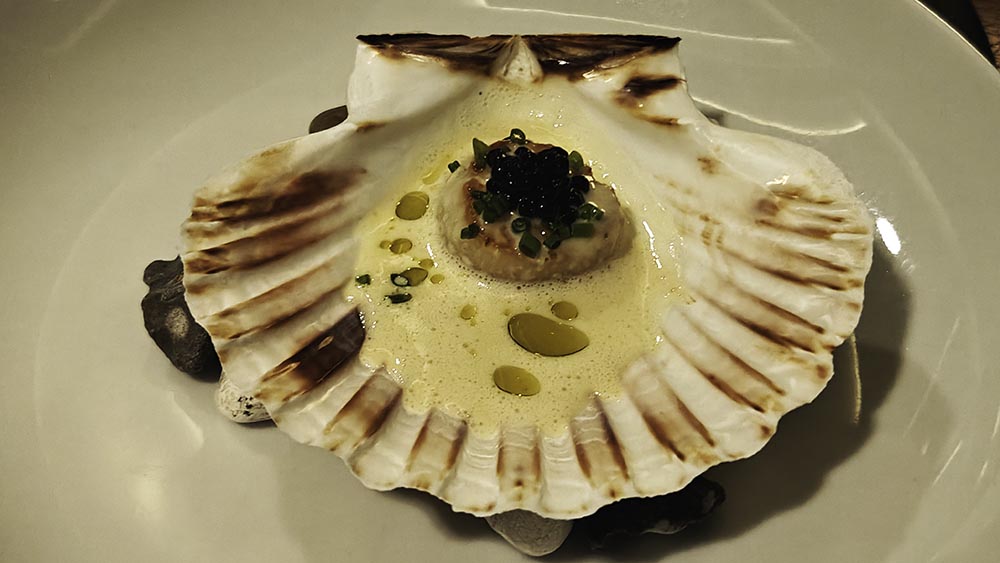
For something more special, the fine-dining restaurant Hildring offers a six-course tasting menu that alternates between fish and meat each day. The name refers to a Norwegian mirage where light bends in such a way that ships appear to float above the horizon, an illusion that feels oddly appropriate while dining here. One standout dish was scallops served in their shell with horseradish vinaigrette, as elegant as anything I’ve tasted ashore.
Weather and wonder
The scenery along the coastal voyage is simply breathtaking. Leaving Bergen, the route winds through sheltered fjords and island chains, with tiny fishing villages and snow-dusted mountains lining the shoreline. The ship hugs the coast almost the entire time, slipping through narrow channels and quiet inlets.
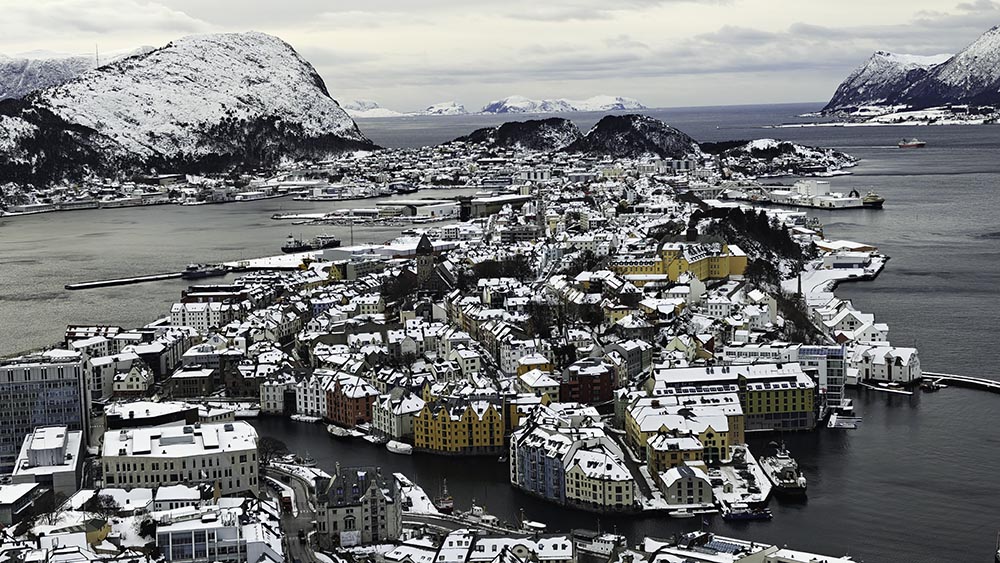
Around Ålesund and Trondheim the landscape opens into a dramatic mix of steep peaks, frozen waterfalls and snow-covered farmland. When we stopped in Trondheim for three hours, I took the chance to visit Nidaros Cathedral, a magnificent Gothic structure that has been a pilgrimage site for nearly a thousand years.
Ålesund, with its Art Nouveau architecture, initially felt a little underwhelming. But as dusk settled the city lights reflected on the water and the buildings began to glow softly — and suddenly the charm revealed itself.
In February the days are still short, and sunrise and sunset stretch into long pastel displays. Apricot, rose and lavender colours fill the sky for hours. Further north the scenery becomes more rugged and remote. In Bodø we decided to try a floating sauna overlooking the harbour, followed by a cold plunge into the Arctic Ocean. It’s the sort of experience that shocks your senses — and leaves you feeling wonderfully alive.
Arctic adventures
In Tromsø I attempted cross-country skiing for the first time. After a quick lesson from our guide, we were off gliding through freshly cut tracks. It was exhilarating without being too intimidating, although we had to dodge plenty of energetic locals enjoying their Sunday afternoon workouts — often accompanied by dogs, children and ski buggies.
Next came night-time snowmobiling. An hour after dusk we disembarked the ship and were quickly ushered into a hut where we were fitted with heavy snow gear, gloves and motorcycle helmets. As we boarded the bus that would take us to the snowmobiles, it was slightly unsettling to watch our ship sail away — especially since we would be riding across the Arctic landscape to the next port.
After a detailed briefing we headed off into the starry night, following our guide through the pristine snow of Finnmark, Norway’s northernmost region. Keeping pace with the red taillights of the lead skidoo required concentration, but the experience was action-packed. At times it felt like I had wandered into the middle of a James Bond chase scene.
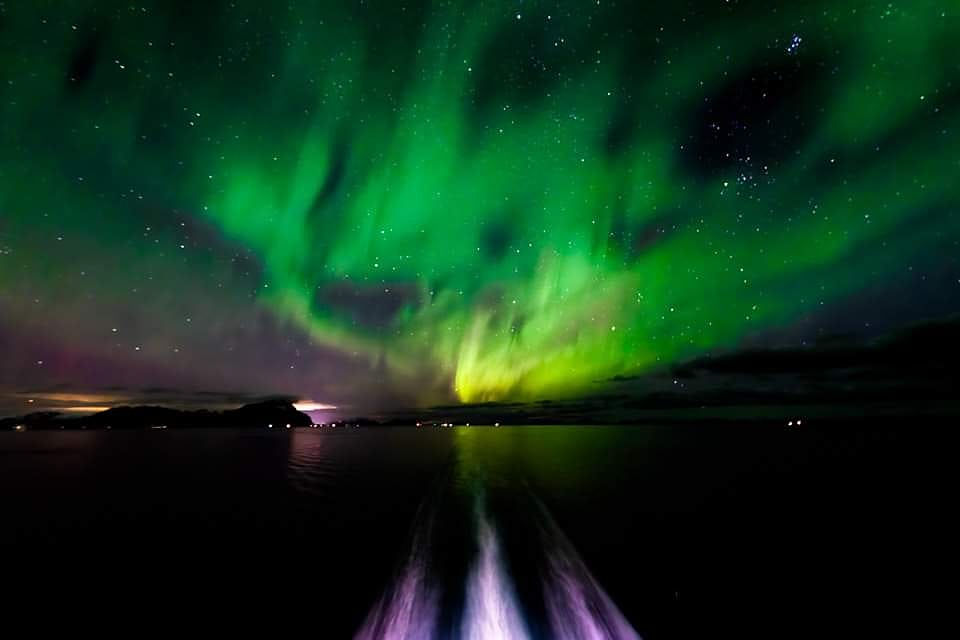
Midway through the journey we stopped and switched off the engines. In the silence we all tilted our heads back and pointed our phones toward the sky. At first it looked like nothing more than a grey mist drifting above us. But slowly, through the lenses of our cameras, faint streaks of green began to appear. The Northern Lights were there after all — subtle and ghostlike, not clearly always visible to the naked eye but unmistakable on our screens.
As we approached Kirkenes, the final stop on our voyage, the atmosphere on board became noticeably more excited and curious. Outside, the mercury had dropped to below minus ten degrees Celsius and the sea itself was beginning to freeze, with small plates of ice drifting past the ship. Conversations turned to what we should do once we arrived.
Some passengers were debating a tour to the Russian border, while others were planning a visit to the Snowhotel, which included a husky dog ride. The bravest could even spend the night in the ice hotel itself. Guests sleep in specialised insulated sleeping bags on thick mattresses and reindeer hides, laid on beds carved from blocks of ice. In the end, we chose the husky dog ride. The Alaskan huskies were bursting with energy, clearly thrilled at the chance to run, and soon they were pulling us across the frozen Arctic landscape for a 20-minute ride through snow-covered trails and silent, icy fjords.

By the end of the trip, I realised the journey had been far more than a simple search for the Northern Lights. The voyage along Norway’s historic coastal route offered a rare window into life along this rugged shoreline, from quiet fjord villages and dramatic Arctic landscapes to the warmth of shared meals and unexpected encounters along the way. Travelling aboard a modern ship while following a 130-year-old maritime lifeline felt like experiencing both Norway’s past and its future at the same time. And somewhere between the silent fjords, snowy adventures and that faint shimmer of green in the Arctic sky, the legendary coastal voyage more than lived up to the stories I’d heard all those years ago.
More information
Havila Voyages operates a fleet of four modern, environmentally friendly ships on the historic Norwegian coastal route, often referred to as the Coastal Express (Kystruten).
The company offers 12-day round trips between Bergen and Kirkenes, with the ability to book shorter segments, catering to both tourists and locals traveling between the 34 ports.
Breaking Travel News spoke with Pia Kuusisto, head of sales for Havila Voyages, at ITB
Words and 360° video: Mark Hakansson