

Twin Capitals by Sea: The Ferry Link between Tallinn & Helsinki
The route in numbers
Measured on a map, the distance between the Estonian and Finnish capitals is modest - roughly 76 km, or about 41 nautical miles across the Gulf of Finland. In operational terms, however, this short stretch of water is a heavyweight.
According to recent figures from the Port of Tallinn, the Tallinn-Helsinki route alone carried around 7.2 million passengers in 2024, served by seven vessels across three operators: Tallink, Viking Line and Eckerö Line. With up to 10-11 departures a day in each direction depending on the season, travellers are rarely more than a couple of hours from their next sailing.
Crossing times typically sit at around the two-hour mark for the fastest ferries, stretching to just over three hours on slower or overnight services. That sweet spot has made the route attractive for both same-day returns and longer leisure trips that combine time in both capitals.
From medieval lanes to Nordic design in a single itinerary
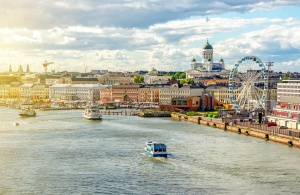
For tourism boards on both sides of the gulf, the ferry has unlocked an easy “two cities, one trip” narrative. Visitors can wander Tallinn’s UNESCO-listed Old Town and its cobbled streets in the morning, then sit down to a design-forward dinner in Helsinki by evening - or reverse the flow, pairing Finland’s galleries, saunas and waterfront cafés with Estonia’s fast-developing culinary and tech scenes.
Many cruise-style passengers still think of ferry travel as purely functional, but the ships on this route increasingly blur the line between transport and experience. Onboard, travellers can expect a mix of lounges, shopping areas, multiple dining options and, on some vessels, quiet spaces designed for business guests to keep working as they sail. Families gravitate towards kid-friendly areas and wide exterior decks; conference and incentive groups appreciate the ability to shift seamlessly from meeting rooms ashore to informal networking over dinner with views of the Baltic Sea.
Year-round reliability & growing sustainability ambitions
One of the route’s strengths is its all-season resilience. Sailings operate throughout the year, with schedules flexing to meet peak summer demand and smoothing out in the shoulder and winter months. For the regional tourism sector, that predictability underpins everything from short city breaks to major events, allowing organisers to sell cross-border programmes with confidence.
At the same time, the crossing has become a showcase for greener ferry technology. In recent years, operators have introduced newer ro-pax vessels with improved fuel efficiency and lower emissions, including Tallink’s MyStar, which entered service on the route in late 2022. Viking Line, meanwhile, has announced plans for what it calls the world’s largest fully electric car ferry, intended for the Helsinki-Tallinn service in the next decade - a move that underlines just how strategically important this short route has become.
Gateway to the wider Baltic
For many international visitors, Tallinn and Helsinki act as convenient stepping stones into the wider Baltic and Nordic region. With air links feeding both capitals, the ferry effectively becomes an additional “flight” option - except one with extra legroom and sea views.
Helsinki’s role as one of Europe’s busiest passenger ports, driven in large part by traffic to and from Tallinn, has been well documented over the past decade. On the Estonian side, port authorities have invested heavily in terminals and passenger facilities, reflecting the route’s role in anchoring the country’s connectivity, cruise business and broader tourism strategy.
Planning the crossing
For travellers and travel trade partners, the practicalities are now remarkably straightforward. Ferries run from Tallinn’s Old City Harbour to multiple terminals in Helsinki, with options tailored to different styles of travel - from simple foot-passenger tickets through to vehicle spaces, cabins and premium lounges.
As schedules and capacity shift with season and weekday patterns, digital platforms have become a natural starting point. Tools that aggregate operators and departure times allow agents and independent travellers alike to compare routes, fares and cabin types in one place; for those exploring options specifically on the Tallinn-Helsinki corridor, Openferry’s Tallinn to Helsinki ferry route page is one example of how this information is increasingly consolidated into a single search.
For the global travel industry, the appeal is obvious: a short, reliable, increasingly sustainable maritime link that not only moves millions of passengers but also connects two distinct destination brands into a compelling joint story. In an era where travellers are looking to string together richer, multi-stop itineraries, the ferry between Tallinn and Helsinki feels less like a simple crossing and more like the spine of a modern Baltic city-pair.