

Best Time to Travel to New Zealand: Seasonal Guide

The timing of your visit determines everything about your New Zealand experience. New Zealand offers visitors a special experience because the country offers something interesting, no matter the season. When is the best time to travel to New Zealand? It all depends on your requirements and expectations. This guide provides essential information that suits your preferences—whether you’re into luxury stays, backpacking, or planning a road trip with a campervan hire in New Zealand. Variety abounds as a key characteristic throughout New Zealand. One day you may be exploring the forests on a hike, and the next you may be enjoying wine by a beautiful bay and jumping off a ski jump afterwards. This article will help us understand the climate patterns by month with recommendations that will help you plan the perfect holiday.
Month-by-Month Guide for Travelling in New Zealand
One of the most exciting things about New Zealand is how dramatically it changes from month to month. Unlike destinations with one clear peak season and an obvious off-season, New Zealand is more like a kaleidoscope, twist it slightly, and you’ll see something completely different. Each month in this guide includes highlights, weather notes, and location-specific suggestions to help you make the most of your visit.
January
Mid-summer. Long, warm days. Great for beach trips, hiking, and festivals. But it’s also peak tourist season, so book early. Popular events include the New Year’s celebrations in Gisborne and music festivals like Rhythm and Vines. Expect higher prices and busy trails, especially in national parks like Tongariro.
February
Still summer, but slightly quieter. Ideal for road trips and outdoor adventures. Vineyards are in full swing. This is a great time for the Marlborough wine region or kayaking in Abel Tasman National Park. The weather is reliable, making it perfect for multi-day treks.
March
Early autumn. Temperatures are mild, and crowds begin to thin. A sweet spot for those seeking balance.Queenstown and Wanaka begin to slow down, offering quieter but still vibrant experiences. The air gets crisp, especially at night, so a light jacket is handy.
April
Cooler, especially in the south. Autumn foliage paints the landscapes. Good for photographers and nature lovers. The Central Otago region becomes a canvas of gold and orange. Fewer tourists mean better accommodation deals, and trails are still accessible.
May
Shoulder season. Fewer tourists. Chillier in the mountains. A nice time for peaceful getaways and off-the-beaten-path exploring. Rotorua’s geothermal areas are more atmospheric in cool weather, and you’ll often have scenic lookouts to yourself.
June
Start of winter. The ski season begins, especially around Queenstown and Wanaka. Expect snow in alpine regions. It’s a good time for stargazing, the skies are clear and dark in rural areas like Tekapo.
July
Peak winter. Best for snow sports. If you’re not into skiing, it’s a great time to enjoy cozy stays and hot springs. Consider visiting Hanmer Springs or the Bay of Plenty’s thermal pools for a relaxing escape from the cold.
August
Still wintry, but with increasing daylight. Good ski conditions continue. Also a great time for whale watching in Kaikoura. Festival lovers might enjoy the Winter Games in Queenstown, a celebration of snow culture and competition.
September
Spring starts. Nature reawakens, cherry blossoms, lambs, and lush greenery. Weather can be unpredictable. Ideal for budget travelers looking to avoid the summer crowds. Gardens in Christchurch begin to bloom, and waterfalls are often at their peak.
October
More spring blooms, mild temperatures, and fewer tourists. Ideal for garden tours and hiking. The Taranaki region is stunning during this time, and daylight savings returns, giving you longer evenings to explore.
November
Late spring. Warm and vibrant, but without the summer crowds. One of the most underrated times to visit. This is a perfect month for exploring the Coromandel Peninsula, with fewer people and beautiful weather.
December
Early summer. Everything’s in full bloom, and holiday energy starts to rise. A festive and lively time to arrive. Christmas in New Zealand is celebrated with BBQs and beach days. Expect a cheerful mood in both big cities and small towns.
New Zealand Climate Guide by Month
New Zealand’s climate ranges from subtropical in the north to cool temperate in the south. Here’s a general breakdown:
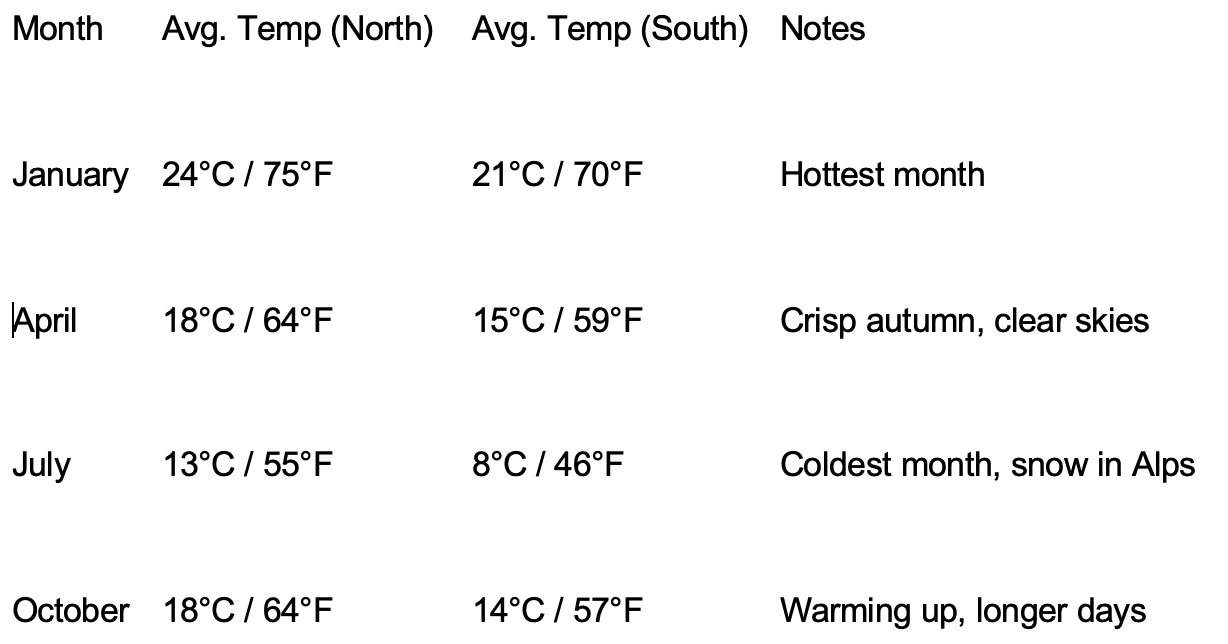
Rain is frequent year-round, especially on the West Coast of the South Island. Layers and waterproofs are your friends. The North Island tends to be warmer and more humid, while the South Island offers more dramatic seasonal contrasts, think alpine winters and golden autumns.
Travel Advice
Whether it’s your first time in New Zealand or your fifth, a few practical tips can go a long way in making your trip smoother and more memorable. From packing smart to navigating remote regions, here are some suggestions based on real travel experiences, not just guidebooks.
● Book early if you’re planning to visit in summer (December–February) or during the winter ski season.
● Pack layers, no matter the season. The weather can flip unexpectedly, especially in mountainous regions.
● Drive carefully, New Zealand roads are scenic but often narrow and winding.
● Don’t rush your itinerary. It’s better to explore fewer places more deeply than to try and “see it all.”
● Check the DOC (Department of Conservation) for up-to-date hiking track conditions and permits.
● Use local knowledge. Kiwis (that’s what New Zealanders call themselves) are friendly and often happy to share tips.
● Consider shoulder seasons, March and November in particular offer mild weather and fewer crowds.
No matter when you go, a bit of preparation can make the journey more rewarding. Take your time, stay flexible, and let the country surprise you, because it will. Often in the best ways.
Conclusion
So, what’s the best time to travel to New Zealand? There’s no one-size-fits-all answer, and that’s the beauty of it. Whether you dream of sun-soaked beaches, misty fjords, or snow-covered slopes, there’s a perfect window for your adventure. Take the time to consider what matters most: the weather, the vibe, the costs, or the kind of experience you crave. Whatever you choose, New Zealand is sure to leave a mark, and maybe even call you back again.