

How to choose a car for eco-friendly travelling and reduce emissions

When planning an eco-friendly road trip, the choice of vehicle plays a crucial role in minimizing environmental impact. One of the key components that contribute to reducing emissions during car travel is the catalytic converter. This device is essential for controlling harmful pollutants released from the exhaust system. Understanding how catalytic converters work, along with selecting the right vehicle for eco-friendly travel, can make a significant difference, especially on long journeys
The Importance of Catalytic Converters in Reducing Emissions
Catalytic converters are a vital part of a car’s exhaust system, responsible for reducing harmful gases like carbon monoxide (CO), nitrogen oxides (NOx), and hydrocarbons (HC). These gases contribute significantly to air pollution and climate change. A catalytic converter transforms these pollutants into less harmful substances—mainly carbon dioxide (CO2) and water vapor—before they are released into the atmosphere. This process greatly reduces the vehicle’s overall emissions, making it a key component for eco-friendly travel.
For long journeys, catalytic converters are particularly important. The extended use of the engine over many hours can lead to a higher volume of pollutants being produced. An efficient catalytic converter ensures that these emissions are kept to a minimum, protecting both the environment and adhering to regulatory standards. For example, an option such as a Catalytic converter for Peugeot 208 from the Buycarparts website is designed to meet stringent emission requirements and can be a great choice for eco-conscious drivers.
Choosing Eco-Friendly Cars with Efficient Catalytic Converters
When selecting a car for eco-friendly travel, consider vehicles that are designed with efficient catalytic converters. Modern cars, especially hybrid and electric vehicles, are often equipped with advanced exhaust systems that include state-of-the-art catalytic converters. These cars are built to meet stringent emission standards, which makes them excellent options for travelers who are conscious of their environmental footprint.
Statistics on emission reductions with catalytic converters
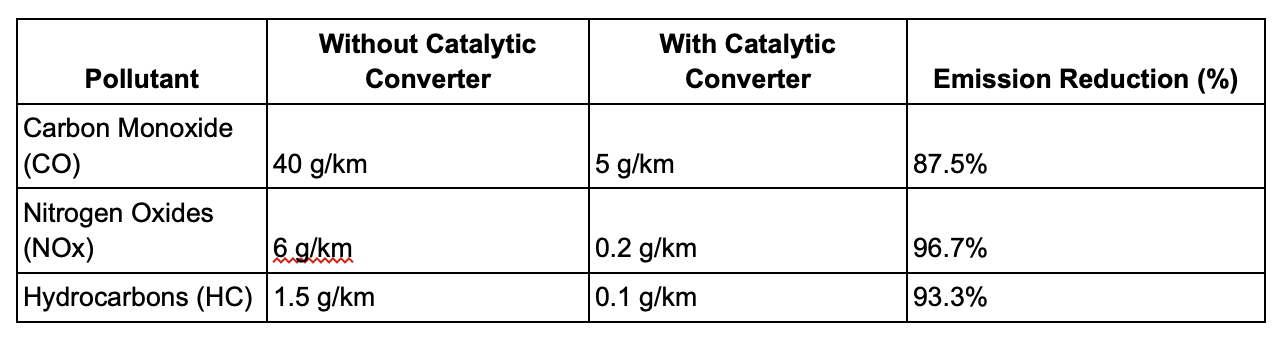
These figures demonstrate the efficiency of catalytic converters in drastically reducing harmful emissions. By choosing a vehicle equipped with a high-performance catalytic converter, you can significantly reduce your carbon footprint during long trips.
Here are a few tips to keep in mind when choosing a car for eco-friendly travel:
1) Look for cars with the latest emission control technology – Many newer models are built with advanced catalytic converters that reduce emissions more effectively than older models. Hybrid vehicles, for instance, combine gasoline engines with electric power, reducing the overall emissions produced during long trips.
2) Choose a vehicle that meets or exceeds European emission standards – In Europe, emission standards are becoming stricter, with regulations like Euro 6 imposing limits on the amount of pollutants a car can release. Vehicles that comply with these standards have efficient catalytic converters, which are crucial for minimizing emissions on long drives.
3) Consider fuel efficiency – Cars that consume less fuel generally emit fewer pollutants. Vehicles with smaller engines, hybrids, or electric cars tend to be more fuel-efficient, making them ideal for long journeys. While electric cars do not have catalytic converters, they produce zero tailpipe emissions, making them the greenest option available.
Maintaining Your Catalytic Converter for Long Journeys
Proper maintenance of your catalytic converter is key to ensuring both vehicle longevity and environmental protection, particularly during extended travel. Over time, the efficiency of a catalytic converter can decline due to the buildup of carbon deposits or physical damage.
Insight: Studies show that vehicles with poorly maintained catalytic converters can emit up to 30% more pollutants compared to well-maintained ones. This means that simple maintenance practices can make a significant environmental impact, especially on long journeys.
Here are some maintenance tips to ensure your catalytic converter remains efficient for long trips:
1) Regular engine tune-ups – A well-maintained engine ensures that the catalytic converter is operating under optimal conditions. Poor engine performance, such as misfiring, can damage the converter, reducing its ability to process harmful emissions.
2) Use the correct fuel – Using the appropriate fuel for your vehicle is essential. Unleaded gasoline is necessary for cars with catalytic converters, as leaded fuels can quickly render the converter useless by clogging the catalyst. Additionally, using fuel with low sulfur content reduces the chances of damaging the converter over time.
3) Check for warning signs – Modern cars are equipped with onboard diagnostic systems that alert drivers when the catalytic converter is not functioning properly. Pay attention to these warnings and have the system inspected as needed.
4) Drive efficiently – Hard acceleration, frequent stop-and-go driving, and idling for long periods can stress the catalytic converter. Maintaining a steady speed and driving conservatively on long trips can prevent damage and improve the overall efficiency of your vehicle.
By keeping your catalytic converter in good working condition, you not only prolong the life of your vehicle but also contribute to reducing its environmental impact.
The Impact of European Emission Standards on Travel Choices
In Europe, emission standards play a critical role in determining which cars are allowed on the road, particularly in urban areas. Many European countries have implemented low-emission zones (LEZs) or zero-emission zones (ZEZs), where only cars meeting specific emission requirements are permitted. For travelers, this means selecting a vehicle that complies with these standards is essential, especially when planning to visit multiple countries during a long road trip.
Cars that meet Euro 6 standards or higher are typically equipped with efficient catalytic converters that drastically reduce NOx and particulate matter emissions. These vehicles not only comply with local regulations but also offer reduced fuel consumption, which is beneficial for both the environment and your wallet.
For those planning extended travel across Europe, hybrid vehicles or small-engine cars with efficient catalytic converters are excellent choices. They offer the balance of lower emissions, fuel efficiency, and the ability to meet the varying environmental regulations across different regions.
Conclusion
Choosing the right car for eco-friendly travel requires careful consideration of emission control technologies, fuel efficiency, and regulatory compliance. Catalytic converters are a critical part of reducing emissions during long journeys, and selecting a vehicle equipped with an efficient converter can make a significant difference. Regular maintenance ensures that your car remains environmentally friendly and performs well, even on extended trips.
By understanding the role of catalytic converters and the impact of emission standards, you can make informed choices that benefit both the environment and your travel experience. Whether opting for a hybrid vehicle, a small-engine car, or simply maintaining your catalytic converter, eco-conscious decisions make all the difference when embarking on long journeys.