

BTN Investigates: Trend Report from TOURISE 2025

In this new series, BTN brings readers the latest tourism trends directly from the source: industry leaders, innovators, and experts we meet at global events.
At Tourise 2025 in Riyadh, ministers, CEOs, futurists, and World Travel Awards winners gathered to map the sector’s next chapter, and the atmosphere was nothing short of electric.
Tourism’s New Confidence: “A Phenomenal Industry that Always Bounces Back”
Across interviews, one theme rose above all others: optimism.
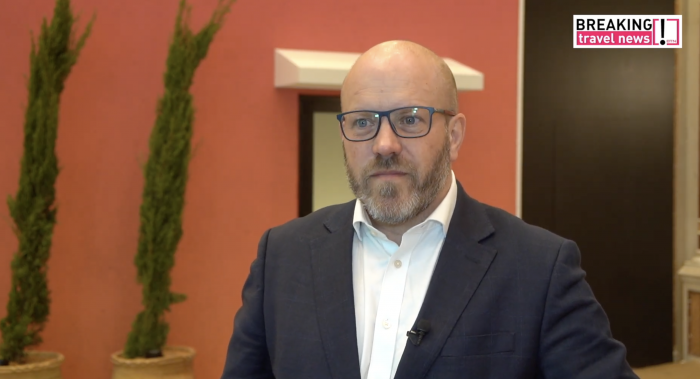 David Goodger, Managing Director of Tourism Economics EMEA
In a time of global shocks, tourism has rebounded stronger than the broader economy. As David Goodger, Managing Director of Tourism Economics EMEA, observes, the data shows a sector defined by resilience:
“Every time tourism bounces back… it has bounced back more strongly and to a higher level than the wider economy. It is one of the most resilient sectors in the world.”
He adds that global traveler numbers will double within the decade:
“We estimate we’re going to be topping 2 billion travelers by 2030.”
Importantly, demand is expanding across demographics and geographies. Millennials and Gen Z are driving a desire for connection, culture, and community; emerging markets like China, India, and GCC countries are accelerating outbound travel; and destinations worldwide are adjusting their strategies to deepen this demand. Goodger observes:
“People want authentic, cultural experiences. Humans are social animals—and that’s why we see travel recovering.”
In every corner of Tourise, this renewed confidence was palpable.
AI and Tech Innovation Reshape the Travel Value Chain
If sustainability was the heartbeat of Tourise 2025, AI was its nervous system: animating every conversation.
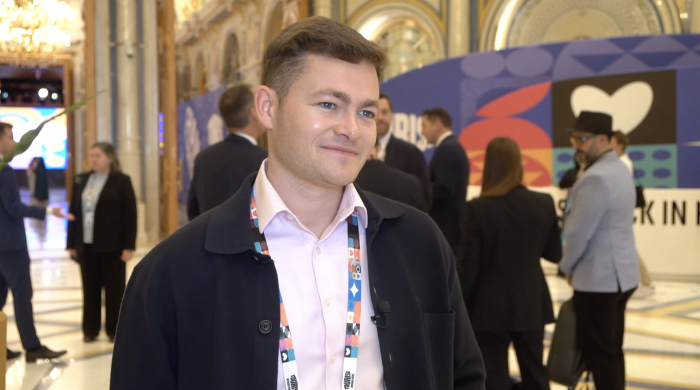 Craig Everett, Co-Founder & CEO of Holibob
Craig Everett, Co-Founder & CEO of Holibob, framed AI not as a threat to human roles but as the connective tissue of a fragmented industry:
“We need to collaborate more… to provide that orchestration layer which ultimately gives consumers that seamless journey they desire.”
He noted the formation of the Agenda AI Coalition - an initiative led by the Saudi Minister of Tourism and backed by Trip.com, Red Sea Global, AWS, Amadeus, and Holibob - to chart ethical, effective uses of AI across the travel ecosystem.
For hotel groups, AI is proving not a job-replacer but a skill-accelerator. One hospitality leader noted:
“AI helps people be less on the computer and more on the ground enhancing the guest experience.”
One of the most future-facing observations came from Christopher Sanderson, Co-Founder of The Future Laboratory, who revealed the findings of a major new study on AI and luxury hospitality:
“AI is leveling up the entire sector. Mid-range brands can now play like a luxury business… a real challenge to legacy hospitality brands.”
AI makes hyper-personalisation, seamless service, and predictive guest satisfaction non-negotiable across all tiers, with Saudi Arabia as the world’s testbed for innovation.
 Fahd Hamidaddin, CEO of the Saudi Tourism Authority and Vice Chair of Tourise
Fahd Hamidaddin, CEO of the Saudi Tourism Authority and Vice Chair of Tourise, used the global stage to champion Saudi Arabia as the ideal sandbox for travel technology:
“Saudi is a perfect testbed for new innovative concepts at a destination level… a largest living testbed of so many concepts.”
He highlighted how cities like Diriyah and destinations like The Red Sea are embedding advanced mobility, AI, regenerative tourism principles, and scientific marine preservation directly into their blueprints for immersive, data-driven destination marketing
stc, the Saudi digital powerhouse, showcased highly sophisticated tourism data platforms:
“We are offering a 360° view of tourist data, from their first impression until they leave… turning insights into action to elevate the tourist experience.”
Their innovations included VR destination previews, investor heat maps, and sentiment-tracking across social media - all available within unified dashboards.
AI, then, is not a single trend at Tourise 2025. It is the infrastructure underpinning travel’s next evolution.
Sustainability Evolves into a Core Business Driver
If AI is the “how” of travel’s future, sustainability is the “why.”
 Christian Delom, Secretary General of A World For Travel Forum
From aspiration to implementation, the most profound sustainability insights came from Christian Delom, Secretary General of A World For Travel Forum, fresh from convening 100+ global thought leaders in Paris:
“For the first time, we have shifted from resilience and awareness to achievements and solutions.”
He emphasised that sustainability is now embedded—not an optional add-on:
“Sustainability is not something apart. It’s part of the offer. It allows experiences to change—and everybody is happy to pay for new experiences.”
For island destinations at the front line of global warming effects, sustainability is existential. Ibrahim Shiuree, CEO of Visit Maldives, stated bluntly:
“Climate change is happening in our backyard every day.”
He outlined major investments in sustainable branding, big data for better decision-making, and tourist engagement campaigns that will debut in 2026.
In Saudi itself, from coral nurseries at The Red Sea to low-impact masterplanning in Diriyah, the Saudi sustainability narrative is not marketing, it’s infrastructure. As Hamidaddin explained:
“What scientists were able to do in those coral nurseries is a testament to what technology can do to preserve marine life.”
_at_Airbnb.png) Velma Corcoran, Director of Policy Strategy (EMEA) at Airbnb
Velma Corcoran, Director of Policy Strategy (EMEA) at Airbnb
Velma Corcoran, Director of Policy Strategy (EMEA) at Airbnb, highlighted a pragmatic point often overlooked:
“Staying in a short-term rental is a more sustainable way to travel—you don’t have to build additional accommodation.”
This aligns with another trend: dispersing tourism into new communities and reducing pressure on hotspots.
New Travel Trends: Community, Culture & Multi-Stop Journeys, Micro-holidays and multi-property stays
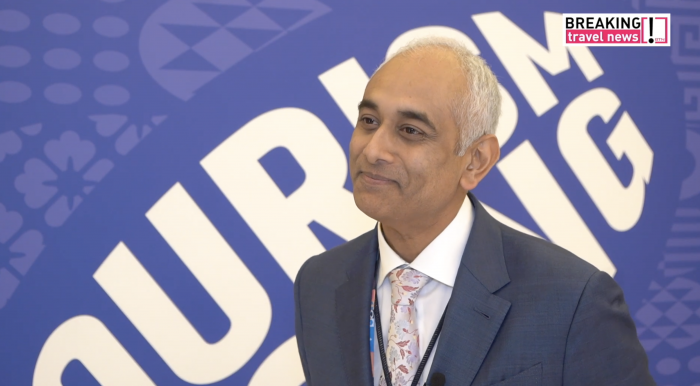 Kiran Haslam, CMO of Diriyah Company
As Kiran Haslam, CMO of Diriyah Company, observed, travellers are increasingly seeking variety:
“Consumers don’t want to stay in one hotel for the entire trip. They are breaking holidays into micro-experiences.”
From the Maldives to Armenia, destinations are emphasising authentic, local experiences. Visit Maldives highlighted a major strategic shift:
“People know the sea and beaches. Now we are focusing more on community—our culture, foods, festivities.”
This represents a fundamental rebranding of destinations long known for “paradise” imagery, to mixed-use luxury and adaptive reuse.
Across hospitality, mixed-use developments, heritage preservation, and adaptive reuse were cited as rapidly growing areas, for reasons of sustainability, culture, and luxury sensibility.
One industry leader noted:
“We are building upon the heritage of places and making it work more luxuriously together.”
Food & beverage is evolving from an amenity to a cultural bridge:
“It’s not just hotel restaurants. They are standalone spaces attracting local communities, creating belonging.”
Destination Momentum: Saudi Arabia as Global Convenor
Perhaps the strongest storyline emerging from Tourise 2025 was Saudi Arabia’s position at the centre of global tourism dialogue; as a catalyst, convenor, and collaborator.
Hamidaddin said it best:
“The best part of Tourise is seeing sector leaders creating new opportunities we didn’t even think of.”
Saudi Arabia is not merely building destinations—it is shaping conversations, partnerships, and global frameworks.
Many interviewees used the same words: phenomenal, mind-blowing, exceptional, to describe the inaugural event.
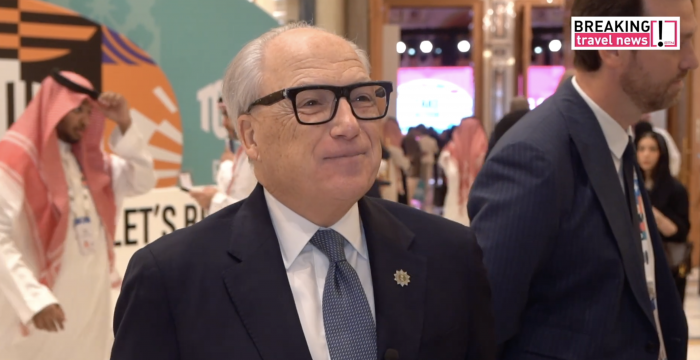 Jerry Inzerillo, Group CEO of Diriyah Gate Company Limited
Jerry Inzerillo, Group CEO of Diriyah Gate Company Limited, reflected:
“This is the first time the entire tourism ecosystem is gathered from all over the world. Very diverse, very exciting.”
Kiran Haslam added:
“This is probably one of the most promising conferences—relaxed, engaging, profound.”
Even seasoned CEOs marvelled at its scale, noting that such cross-sector convening simply hasn’t existed elsewhere.
Ministers and Governments: Opening Markets and Removing Barriers
Lusine Gevorgyan, Chairman of the Tourism Committee of Armenia, highlighted rapid transformation:
“We liberalised visas for five countries… we want more visitors and more cooperation with new markets.”
Armenia is also pioneering AI-driven visitor chatbots to provide instant, clear information for travellers:
“Tourists in 21st century want fast, clear information—and this chatbot will develop AI in tourism for Armenia.”
Visit Maldives framed Saudi and GCC markets as “sleeping giants” for island destinations:
“It’s an important market… we haven’t reached its true potential.”
The Sentiment: Unity, Urgency, and Unprecedented Opportunity
Perhaps the most striking takeaway from Tourise 2025 was the emotional cohesion running through every conversation: a powerful blend of unity, urgency, and an acute awareness of unprecedented opportunity.
Across interviews, leaders spoke of a sector coming together in a way never seen before, with one attendee noting, “This event has brought everybody together from all over the world… a great start to the day.”
That sense of togetherness was matched by a collective drive to act quickly, whether on sustainability, AI adoption, infrastructure, or managing surging demand, the message was clear: progress must be collaborative, decisive, and immediate.
Layered onto this was a profound recognition of scale. Saudi Arabia’s ambitions and the enthusiastic global engagement they have attracted are positioning the Kingdom as a gravitational centre for the next decade of global tourism.
As one participant captured perfectly:
“Here in Riyadh, we see a mobilisation for seeking the future of tourism—not just saying who we are, but building what’s next.”
TOURISE
Conclusion: Travel’s Next Chapter Is Being Written Now
Tourise 2025 revealed an industry that is not merely recovering—it is reinventing itself.
- AI is levelling the playing field.
- Sustainability is embedded into core strategy.
- Destinations are evolving beyond “places” to become platforms for culture, technology, and regenerative design.
- Ministers, CEOs, and innovators are aligned in purpose: to unlock the next trillion dollars of growth responsibly and collaboratively.
And as global travel demand surges toward 2 billion travelers by 2030, the leaders at Tourise 2025 have made one message abundantly clear:
The future of tourism is not something we wait for. It is something we build—together.
By Sapphire Goss