

A Visionary for a New Global Tourism Order – Shaikha Al Nowais’s Strategic Blueprint
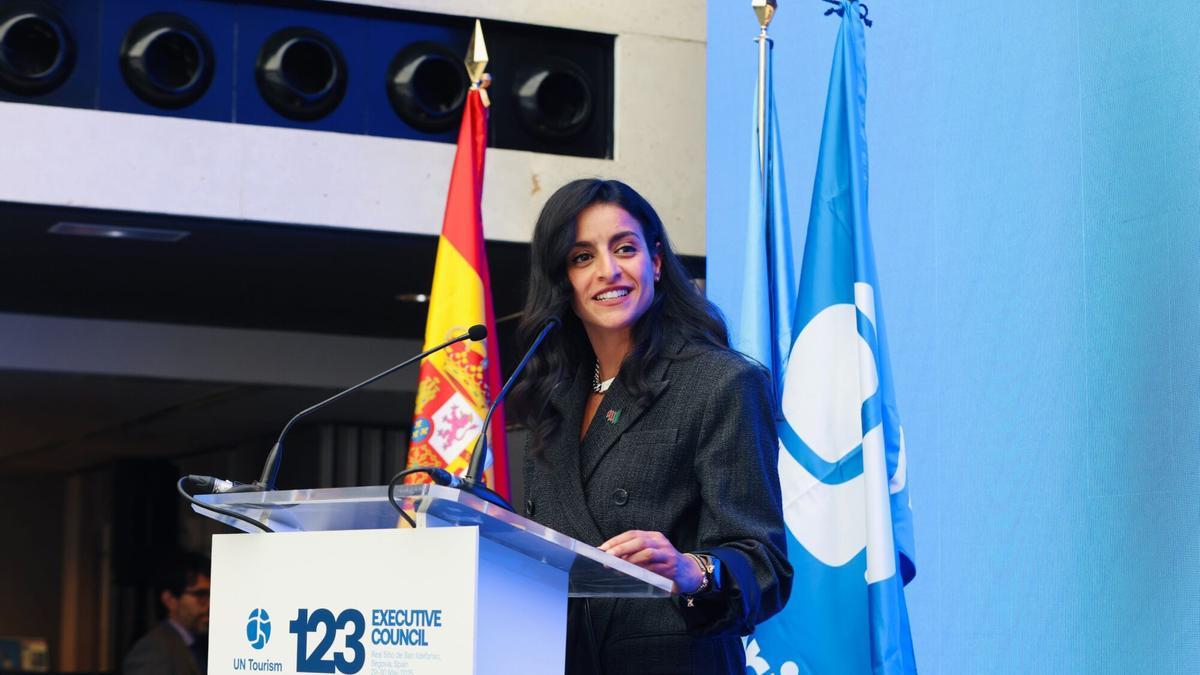 Shaikha Nasser Al Nowais as the first woman—and the first Emirati—to assume the role of Secretary-General of UN Tourism.
In a historic turning point for international tourism governance, the 123st session of the UN Tourism Executive Council convened in Madrid, Spain, delivered a momentous decision: the nomination of Shaikha Nasser Al Nowais as the first woman—and the first Emirati—to assume the role of Secretary-General of UN Tourism. But beyond the headlines, Al Nowais brings to the table not just representation, but a strategic blueprint to reform and realign global tourism around equity, peace, and sustainability.
Power Shift: Recalibrating the Global Tourism Order
Shaikha Al Nowais’s vision is as bold as it is timely. Drawing from nearly two decades of executive leadership in the hospitality sector and economic policy advisory, she aims to rebalance the structural inequities that have long shaped the global tourism narrative.
“Tourism must be decolonized and democratized,” she declared in Madrid, in a speech that set the tone for her transformative leadership style. “It should be a bridge, not a barrier, between nations, cultures, and communities.”
Her strategic intent—articulated in a comprehensive policy statement published ahead of her nomination—positions Global South empowerment and cultural diplomacy as central pillars of her reformist agenda.
From Tourism to Tool of Diplomacy: Building Bridges through Culture
At the core of Al Nowais’s agenda is the concept of tourism as a vehicle for peacebuilding and mutual understanding. Her proposal includes the creation of a new global initiative under UN Tourism:
• The Cultural Heritage and Peace Initiative, which will collaborate with UNESCO and ICOMOS to support the revitalization of heritage sites in post-conflict regions.
• UN Tourism Cultural Exchange Scholarships, targeting youth from marginalized communities and conflict zones, to engage in immersive learning programs in leading cultural tourism hubs.
• Tourism Literacy Campaigns, aimed at reshaping how host communities engage with tourists—fostering empathy, pride, and ownership of cultural heritage.
These programs are deeply inspired by Al Nowais’s academic and community work, particularly her leadership roles in institutions like the Abu Dhabi Hospitality Academy (Les Roches) and the Global Hospitality Asset Managers Association (HAMA).
Economic Justice: Tourism as a Global Equalizer
Perhaps one of her most revolutionary initiatives is her call for a reimagining of tourism as a mechanism of economic justice, especially for developing and climate-vulnerable nations. Her administration aims to:
• Launch a UN Tourism Local Empowerment Fund to provide microgrants to women-led tourism startups and community cooperatives in low-income countries.
• Push for greater representation of African, Pacific Island, and South Asian nations in policy-making and executive decision bodies.
• Advocate for Visa Equity—simplifying entry protocols for travelers from the Global South and developing Smart Border Frameworks to facilitate regional tourism.
“The future of tourism belongs not just to the well-traveled, but to the underrepresented,” she said, echoing a call for structural fairness that has long been missing from global tourism governance.
Digital Modernization for the Margins
Al Nowais also lays out a bold technology modernization roadmap, especially for countries still catching up to the digital tourism wave. Her priorities include:
• Supporting governments in AI adoption for visitor profiling and experience personalization.
• Integrating blockchain systems to enhance transparency in tourism transactions and carbon offset verification.
• Launching a new Digital Tourism Accelerator for the Global South, which will provide training, tools, and funding to digitalize tourism boards and small operators.
Her professional experience at Rotana Hotel Management Corporation PJSC, where she served as Corporate Vice President for Owner Relationship Management, saw her implementing tech-forward strategies across hotel portfolios spanning the Middle East, Africa, Eastern Europe, and Turkey.
Inclusive Governance and Structural Reform
True to her call for inclusivity, Al Nowais proposes reforming UN Tourism’s own structures:
• Enshrining rotating regional leadership roles.
• Establishing youth and civil society observer councils.
• Setting up audit protocols to ensure equitable budget allocations and program impact.
In her policy statement, she also emphasizes the need to “transform UN Tourism from a policy organ into a field engine”—by bringing more on-the-ground capacity-building to member states rather than remaining overly centralized in Geneva or Madrid.
A Secretary-General for the New Majority
In the age of polycrisis—climate threats, cultural fragmentation, post-pandemic economic rebuilding—Shaikha Al Nowais’s nomination comes as a strategic inflection point. Her ambition isn’t merely to manage tourism. It is to redefine its purpose.
“I am not just a candidate from the UAE,” she declared. “I am a candidate from, and for, the global majority.”
Should her leadership be confirmed by the UN General Assembly later this year, the world may witness the rise of a new era—where tourism is no longer the privilege of the few, but the right, opportunity, and pride of all.