

A revolution in bus safety with next-generation front bumper technology

The front bumper of a tourist bus might seem like a minor component, but it plays a critical role in ensuring passenger safety and vehicle performance. Recent technological advancements have transformed this essential part into a sophisticated safety feature. With innovations in materials, structural design, and integrated systems, modern front bumpers are setting new safety standards for long-distance travel. This article explores the latest developments in front bumper technology and their impact on passenger safety.
Why front bumpers are crucial for safety
The primary purpose of a front bumper is to absorb impact during a collision, minimizing damage to the vehicle and protecting its occupants. However, as safety expectations rise, bumpers are evolving into multifunctional systems. Beyond absorbing energy, they now contribute to accident prevention, pedestrian safety, and fuel efficiency.
For example, recent designs emphasize advanced impact absorption, ensuring that forces from a collision are distributed in a way that minimizes harm to passengers. Coupled with new safety technologies, front bumpers are no longer just protective barriers; they are active contributors to overall safety.
Key innovations in bumper design
1. Lightweight, high-strength materials
Traditional bumpers were primarily made of steel or aluminum. While effective, these materials added significant weight to the vehicle, impacting fuel efficiency. Modern designs use advanced composites such as high-strength plastics, carbon fiber, and thermoplastic polymers. These materials offer superior energy absorption, reduce weight, and increase durability.
For instance, carbon fiber-reinforced plastics are now commonly used for their strength and flexibility. These materials allow for thinner, lighter bumpers that can still withstand high-impact collisions. This innovation benefits not only passenger safety but also the environment by improving the vehicle’s fuel economy.
2. Integration with advanced security systems
Front bumpers are increasingly integrated with Advanced Driver Assistance Systems (ADAS), which enhance driver awareness and vehicle control. Key features include:
- Collision Detection Sensors: These sensors detect obstacles, vehicles, or pedestrians, enabling automatic emergency braking (AEB).
- Cameras and Radar Systems: These components assist in lane-keeping, adaptive cruise control, and blind-spot monitoring.
By incorporating these technologies, modern bumpers actively help prevent accidents, reducing the likelihood of injury to passengers and pedestrians alike.
3. Pedestrian-friendly design
In addition to protecting passengers, new front bumpers also consider pedestrian safety. Designs now include energy-dissipating zones and softer outer layers to reduce injuries in low-speed collisions. This is especially important in urban environments where buses frequently interact with pedestrians.
Manufacturers are also testing “pop-up” bumpers that deploy upward during a collision to reduce the risk of a pedestrian being thrown under the vehicle. Such features highlight the industry’s commitment to safety for all road users.
4. Aerodynamic and modular characteristics
Aerodynamic efficiency has become a priority in bumper design. Streamlined shapes not only enhance fuel efficiency but also improve vehicle stability at high speeds, ensuring a safer journey for passengers on long routes.
Modular bumper designs are another recent innovation. These allow individual components to be replaced after minor impacts, reducing repair costs and downtime. By making repairs quicker and easier, bus operators can maintain safety standards without significant delays.
Visualizing the impact of innovations in the front bumper area
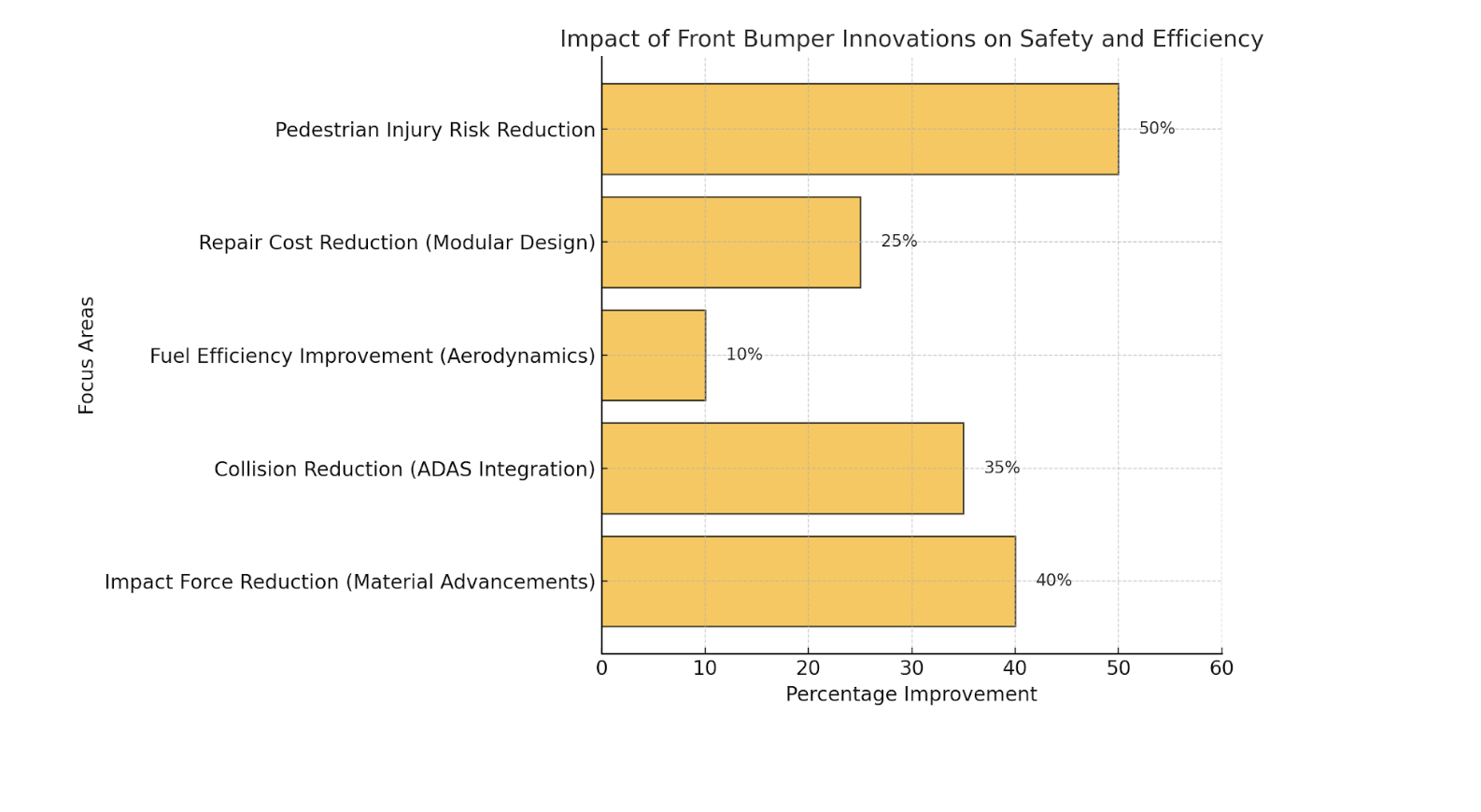
To better understand the tangible benefits of new front bumper technologies, the graph below illustrates improvements across key focus areas based on recent research:
Graph analysis
The graph highlights the following advancements:
- Material Advancements: A 40% reduction in impact forces demonstrates the effectiveness of new composite materials.
- ADAS Integration: Technologies like automatic emergency braking (AEB) have reduced collisions by 35%, showing the critical role of sensor-embedded bumpers.
- Aerodynamics: A 10% improvement in fuel efficiency highlights how streamlined bumper designs benefit long-distance bus travel.
- Modular Design: Repair costs have been cut by 25%, thanks to replaceable components that minimize downtime.
- Pedestrian Safety: Innovations like energy-dissipating zones have reduced the risk of severe pedestrian injuries by 50% during low-speed impacts.
This visualization emphasizes the measurable impact of these innovations, showcasing how technological advancements in front bumper design directly contribute to safer and more efficient road travel.
Exploring innovations in front bumpers
To better understand the impact of new front bumper designs on safety and efficiency, recent studies and industry reports have highlighted specific advancements. Below is a summary of key findings presented in a table for clarity:
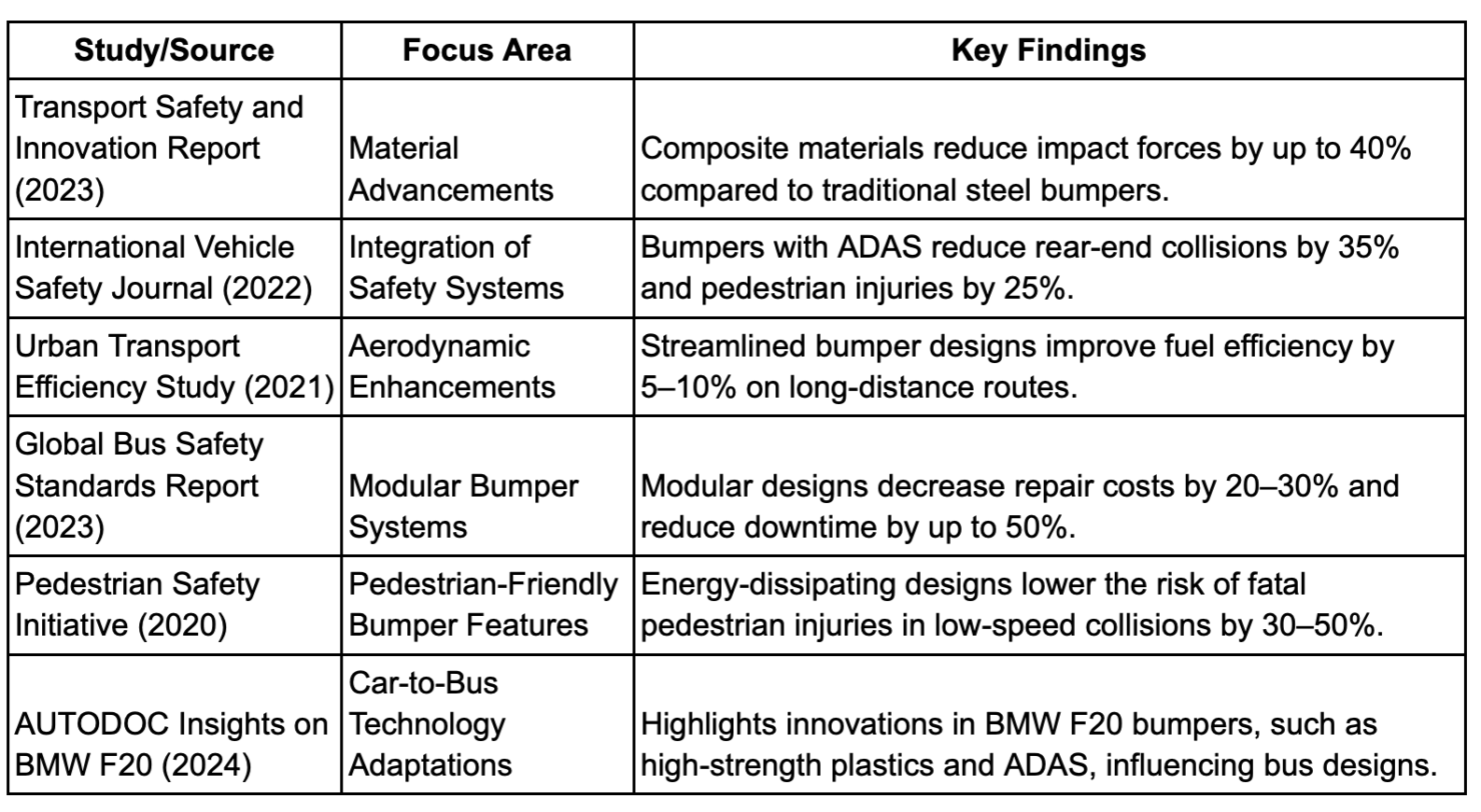
Innovations in front bumper design are revolutionizing the safety and performance of tourist buses. From lightweight materials and advanced safety systems to pedestrian-friendly features and aerodynamic improvements, these developments are setting new standards in the industry. While challenges like cost and durability remain, the benefits far outweigh the drawbacks.
Details about front bumper for BMW F20 from website AUTODOC highlight how innovations in car design are shaping bus technology, showcasing the interconnectedness of vehicle safety advancements. The future of tourist buses is not only safer but also more efficient, sustainable, and cost-effective. Passengers can look forward to more secure and enjoyable travel, thanks to these cutting-edge designs.